
Review of 84, Charing Cross Road by Helene Hanff

This classic memoir is told through letters between Hanff, living a passionate reader and writer's life in New York City, and a group of booksellers across the ocean who are struggling in postwar Great Britain. The structure allows for poignancy and wonderfully frank self-reflection.
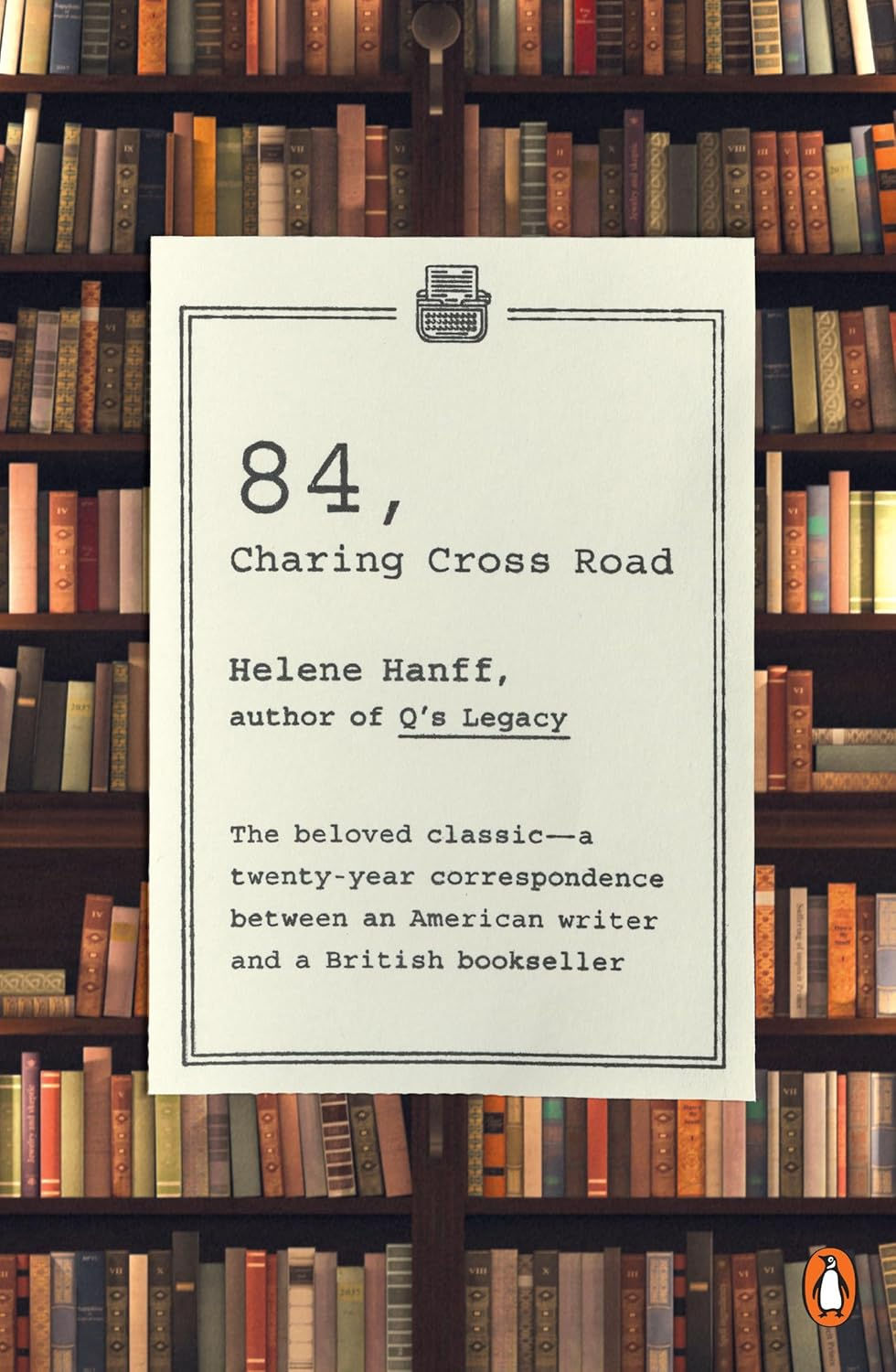
In interviews about her wonderful book The Correspondent, Virginia Evans mentioned another epistolary book, the 1970 classic memoir 84, Charing Cross Road, and I hadn't ever read it so I decided to dive in.
This slim book consists of the charming twenty-year correspondence between a hotheaded, opinionated New York writer (Hanff) and an antiquarian bookseller in London, Frank Doel. Deep friendships build across the ocean through Hanff's particular book requests and life commentary, Frank's steady, warm replies, Hanff's postwar parcels of food and treats for the staff, and the grateful reactions sent her way.
Along with Helene ("HH") and Frank's correspondence, the gradual expansion of Helene's communication to others working in the shop, Frank's wife, and, ultimately, his daughters, paints a poignant picture of the significant roles the pen pals played in each other's lives.
The memoir's back-and-forth gems illuminate the evolving wartime struggles of British citizens such as the booksellers and their loved ones, and in comparison we hear of the relative largesse Hanff is able to provide from across the ocean. Yet it becomes clear that Helene lives a frugal New York City existence focused on books, self-taught education, writing, and stimulating her mind. Her generosity is significant, but her ability to share her meager resources emphasizes the chasm between the existences of the parties who are corresponding with each other.
A much-anticipated, repeatedly postponed visit between the pen pals seems destined to never occur, yet the emotional bonds between the various parties are meaningful and substantial. Candid observations and occasional confessions flow freely between the friends who have never met in person. When one side suffers a loss, it is a blow felt on the other side of the ocean.
The correspondence is only half Hanff's, but this epistolary memoir structure and its rich content allow for poignant self-reflection, honest observations, deep connections, and a rich portrait of the author.

More from Hanff and More Epistolary Gems
Helene Hanff is also the author of The Duchess of Bloomsbury Street and Q's Legacy.


Comments