Search Results
Search this site
1622 results found with an empty search
- Review of The Gilded Hour by Sara Donati
ICYMI: This is excellent, layered historical fiction with memorable characters and a great big story to dive into on a hot summer's day. I loved this and felt like it was the perfect 750-page summertime book to dig into. Donati shapes a story in nineteenth century New York City based upon an unconventionally built family and a broad surrounding cast of characters--and it's all centered around independent women with unconventional women's roles in society at the time. The Gilded Hour explores how these women's abilities and constraints intersect with women's rights of the time period, social responsibility, and conventions, all in an immensely readable book rich in period detail, great dialogue, and satisfying elements of love, mystery, and searches for justice. This may be unfair and I may feel this way only because I spent so many happy hours in the lovely company of these characters and concerned with their issues, but a couple of important underlying plot lines remained oddly unresolved at the end--even keeping in mind that there's a second book in Donati's Waverly Place series, Where the Light Enters. I appreciate the resistance to tying up complicated situations with a bow, but in a book of this length and depth when there's space to air out the story somewhat--and because of the energy and page time spent on these topics (Cap's pending demise; bringing a culprit to justice; locating the baby)--not addressing the final loose ends in a more head-on way (or at least the intention to let go of pursuing them) felt a little unsatisfying to me. However, I just loved this story and Donati's storytelling too much to let any of that cloud my gleeful reading experience. Do you have any Bossy thoughts about this book? Donati has also written a series of four books in her Wilderness series, which sounds like an epic romantic historical fiction story set on the American frontier. Which I obviously need to read.
- Review of Sleeping Giants (Themis Files #1) by Sylvain Neuvel
ICYMI: I've been thinking lately about robot books and specifically about this great series by Neuvel, in which a girl stumbles upon pieces of a giant robot and makes solving the mystery her life's work. A girl named Rose in rural South Dakota falls into a hole that has intricate carvings covering the walls, and she wakes up in the palm of an enormous robot hand. Where did it come from? What do the carvings mean? What is the purpose of any of this? Years later Rose is a world-renowned physicist working to unlock the secrets of the hand and the curious artifacts she stumbled across as a child, but the mysteries persist. The Sleeping Giants story is shown through interviews and journal entries. The interview structure keeps the characters at somewhat of a distance from the reader, yet Neuvel allows their spoken-only participation in the book to express their growth, hopes, and fears. The characters relate events that have already happened through the lenses of their own points of view, creating the potential for unreliable narrators, characters who are hiding important information, and many resulting twists and turns. Neuvel explores concepts of personal responsibility, how the possibility of life beyond Earth affects everything, and how manipulation and observation--potentially by other beings in the solar system--shape behavior. Also: the ending--! Do you have any Bossy thoughts about this book? Neuvel was reportedly inspired to write this book after his son asked him to build a toy robot and requested a full back story for the creature. The next books in this series are Waking Gods and Only Human, and I liked them both.
- Three Books I'm Reading Now, 6/14/21 Edition
The Books I'm Reading Now I'm reading a memoir about coping with chronic illness; a twisty mystery in which people aren't always what they seem; and a young adult mystery with heart, the second in a series. Which books are you reading and enjoying these days, bookworms? 01 What Doesn't Kill You by Tessa Miller The subtitle of Miller's memoir What Doesn't Kill You is A Life with Chronic Illness--Lessons from a Body in Revolt. Miller was a twentysomething writer in New York City when she began having odd symptoms, terrible pain, and mysterious physical issues. After multiple misdiagnoses and increasing discomfort and fear, she was ultimately diagnosed with Crohn's disease. In What Doesn't Kill You, Miller explores the isolation of enduring chronic disease, her own personal experiences coping with pain and uncertainty, and how she looks to the future with hope. 02 The Last Thing He Told Me by Laura Dave Hannah has just celebrated her one-year anniversary of marriage to Owen, she may be making the slightest inroads with her teenaged stepdaughter Bailey--and she may finally be getting used to living on a houseboat too. But a stranger shows up at the door with a cryptic message for Hannah, the news says Owen's company was fudging its numbers, and now Owen is nowhere to be found. Laura Dave is setting up a well-rounded, fascinating mystery so far; Hannah and Bailey are pushed to work together to try to find Owen; a US marshal and federal agents are eager to locate him and to pressure his family for information; and the only lawyer Hannah knows to turn to for help is her ex-fiancé, who she left at the altar years ago. The story is wonderfully interpersonally complicated. 03 One of Us Is Next by Karen M. McManus Last year, in One of Us Is Lying, the Bayview four cut through the destructive gossip app taking down reputations and revealing secrets, and they managed to trace a mysterious murder to the source. This year, gossip problems and power plays are back, in the form of forced Truth or Dare. Friends and siblings are pitted against each other, and some of our main protagonists are faced with crises of their own. McManus offers the wonderful established characters of Maeve, Nate, Phoebe, Bronwyn, and Knox from book one, along with other old favorites and new faces, in a set of intertwined, mysterious circumstances. I'm listening to this and can't wait to find out what happens.
- Six Chilly Books to Read in the Heat of Summer
ICYMI: I first posted this Greedy Reading List as a list of cold-setting books to read by a wintry fire, but the heat of summer has recently hit where I am, and the idea of reading a story set in a frigid climate is sounding pretty appealing. Have you read any of these books? I'd love to hear your thoughts! 01 The Child Finder by Rene Denfeld This book is dark and beautiful, with such expansive descriptions of the mountains, the closed-in forests, and the traps and dangers of the winter and the wild that I could almost feel the cold. The elements that feel potentially familiar or could have felt overused from use in other stories (a tough, closed-off investigator, broken by her past; a strong, kind man’s singular, devoted but unrequited love for her; the general outline of the disturbing situation at the heart of the book’s main case) are cushioned by Denfeld’s skillful setting of the scene and lovely shaping of the story. I found this to be a fast and engrossing read. There's a second book in this Naomi Cottle series, The Butterfly Girl, which I haven't yet read, and Denfeld also wrote The Enchanted, which I thought was haunting and arresting. If you like unlikely heroines and missing-person plots, you might also like Before She Disappeared, which I thought was a fantastic book. 02 The North Water by Ian McGuire “He finds the lying comes easy enough, of course. Words are just noises in a certain order, and he can use them any way he wishes. Pigs grunt, ducks quack, and men tell lies: that is how it generally goes.” In 1859, a whaling ship sets sail for the Arctic Circle. It's full of rough characters and men eager to leave their pasts behind, including Patrick Sumner, a doctor who's desperate enough to take the job of ship's surgeon on the boat. But the ship's fate proves more disastrous than Sumner could have imagined when a cabin boy is brutally killed and the culprit turns out to be a cruel, ruthless murderer on board. This was probably 3.75 stars for me. The North Waters is a dark, disturbing exploration of failed second chances, revenge, and destructive base instincts. I found it haunting. McGuire is also the author of Incredible Bodies and The Abstainer. 03 First Light by Rebecca Stead Peter is a teenager from New York City thrilled to be accompanying his scientist parents on an expedition to Greenland. Thea and her people, long accused of witchcraft and magic, live within the Greenland ice, and Thea has never seen the sun. The two intersect within Stead's unique story as Peter tries to discover more about Thea's people's threat of extinction. The pacing of First Light is a little slow at first, and I would have liked to see more science-based details about global warming throughout. The standouts for me in First Light were the Greenland setting, the alternate world, the bitter cold, and the sentimentalism and mystery that were so vividly imagined. I was hooked. This was the author's first young adult book. Stead is also the author of the outstanding Goodbye Stranger, as well as other great books: When You Reach Me, Liar & Spy, and The List of Things That Will Not Change. 04 Disappearing Earth by Julia Phillips Julia Phillips's interconnected stories follow in chapters that take place each month for a year after the disappearance of two girls on the edge of Russia. The rural Siberian settings are exquisitely wrought, with stark, rugged, lush landscapes serving as the backdrop for a mystery that shakes a small community. Disappearing Earth is a story that is as much about the varied cast of characters, the closed-off, remote community, and the vivid sense of place and cold setting that Phillips imagines as it is about the mystery itself. It isn't a police procedural; this is a starkly beautiful book that happens to have a mystery at its heart. This is Phillips's first book, and the author builds the story's pace steadily toward a crescendo. The ending doesn't necessarily provide all the answers, but Phillips provides enough pieces of the puzzle to create closure. I still think about Disappearing Earth from time to time, long after reading it. I also listed Disappearing Earth in the Greedy Reading List The Six Best Mysteries I Read Last Year. 05 The Endurance: Shackleton's Legendary Antarctic Expedition by Caroline Alexander In this beautiful nonfiction book, which includes striking black-and-white photographs by Frank Hurley, Alexander traces explorer Ernest Shackleton's 1914 voyage to the South Atlantic as he and his crew of twenty-seven men attempted to be the first to cross the Antarctic continent on foot. In what is now a famously ill-fated turn of events, the ship Endurance became trapped in the ice and crushed, leaving the crew marooned on the ice in a brutal fight for survival that lasted twenty months. The very existence of Hurley's images is incredible; the glass plate negatives lasted through months on ice floes, a week's travel in an open boat, and months buried in the snow. Eventually Hurley had to leave behind his professional camera and equipment, capturing the images here with "a pocket camera and three rolls of Kodak film." The book was published in conjunction with the American Museum of Natural History's extensive exhibition on Shackleton's exploration, which was one of the last great expeditions in the Age of Exploration. 06 To the Bright Edge of the World by Eowyn Ivey “There is a mythical element to our childhood, it seems, that stays with us always. When we are young, we consume the world in great gulps, and it consumes us, and everything is mysterious and alive and fills us with desire and wonder, fear, and guilt. With the passing of the years, however, those memories become distant and malleable, and we shape them into the stories of who we are. We are brave, or we are cowardly. We are loving, or we are cruel.” To the Bright Edge of the World is a story of discovery, adventure, tedious slogging, danger, and self-revelation in the wilds of nineteenth century Alaska, interspersed with scenes from a home life on a military base in Washington Territory--and a surprisingly meaningful modern-day correspondence linked to it all. Ivey's fantastical elements are inspired by Native American folklore and stories, and they work well here, causing the characters to broaden their views of the great unknown world, but without overshadowing the detailed, vibrant descriptions grounded in exploration and nature. Ivey also wrote The Snow Child, a book listed on the Greedy Reading List Six Magical Fairy Tales Grown-Ups Will Love. What are some of your favorite cold-setting books? Other books I've loved that could have appeared on this list include Eowyn Ivey's The Snow Child, mentioned above, and Katherine Arden's Winternight trilogy, both of which were listed on the Greedy Reading List Six Magical Fairy Tales Grown-Ups Will Love, and Jon Krakauer's Into the Wild and Into Thin Air. The books on the Greedy Reading List Six Captivating Nordic Stories would also fit nicely here. Promising books on my to-read list that would also fit this criteria: Wintering: The Power of Rest and Retreat in Difficult Times by Katherine May, The Arctic Fear by Greer Macallister, Woman in the Polar Night by Christiane Ritter, The Captive by Fiona King Foster, Moon of the Crusted Snow by Waubgeshig Rice, Winter World, the first in a series by A.G. Riddle, and Welcome to the Goddamn Ice Cube: Chasing Fear and Finding Home in the Great White North by Blair Braverman. Have you read any of these? Any thoughts? What other books would you include on this list? Do you like reading cold-setting books in the summer?
- Review of Last Summer at the Golden Hotel by Elyssa Friedland
This summer read makes you feel like you’re in safe hands, and you can be confident that nothing here will go seriously awry. The vivid midcentury memories are a highlight. In Elyssa Friedland's Last Summer at the Golden Hotel, two families meet for the summer at their formerly sought-after resort in the Catskills, but the Weingold and Goldman families aren't as close as they used to be--and the resort itself is falling apart. When an offer comes through to buy the Golden Hotel, the families reach a tipping point. Can they come together to save their beloved sanctuary, or will the uncovering of secrets and lies, family drama, and powerful generational conflicts thwart any possible resolutions for the two clans? I had hoped this book would be Dirty Dancing meets "The Marvelous Mrs. Maisel," and the extensive reminiscing about the hotel's heyday years is really fun. The vivid setting is as essential to the book as a main character, and references to real-life celebrities and details of midcentury life are a highlight. But the book's present pales in comparison to the golden years of the past, and current events begin to feel dreary—hotel conditions are dusty, broken, dated, and dirty; and various disappointing behaviors are brought to light and shake the foundations of the families and of their treasured collective memories. I wanted to feel entrenched in the glory days of that era, but the high points of the hotel are over long before the reader enters the story. Positive, exciting, ambitious ideas are floated for revamping the hotel, but they seem financially impossible. In good news, the hotel crisis seems poised to bring together the families and the younger generations despite the ways in which the family's various hopes are dashed. There felt like significant summary toward the end of the book, with abrupt point of view changes and brief scenes with multiple shifts that kept me from feeling as invested as I might have. This is a summer read that makes you feel like you’re in safe hands, and you can be confident that nothing here will go seriously awry. Last Summer at the Golden Hotel offers conveniently neat wrap-ups to most of its complications. There's interesting, creative reimagining at the end that I enjoyed. I received a prepublication digital edition of this book courtesy of NetGalley and Berkley Publishing Group. Do you have any Bossy thoughts about this book? Friedland is also the author of The Floating Feldmans and other titles. The author started with the Catskills as her setting and said that the characters and story came to her naturally from there. The setting does feel as essential as a character within the story.
- Review of The Maidens by Alex Michaelides
Michaelides weaves Greek mythology, references to ancient ceremony, and superstition into this dark tale, but the particulars of the book's events and the characters' behaviors often feel absurd and improbable. The author of The Silent Patient, Alex Michaelides, has a new book set for publication next week--The Maidens. In it, Mariana, a group therapist coping with her own personal tragedies, becomes embroiled in trying to identify and catch a killer at her alma mater, Cambridge University. Mariana lost her husband a year ago in a holiday accident in her coastal Greek hometown, and she's still reeling. When her beloved niece Zoe calls from her Cambridge dormitory, frantic about her missing friend, Mariana leaves her most problematic client and therapy group and hops on a train to try to help. The rest of the book seems to hinge on Mariana's intuition and largely drops the therapist aspect except in name; she frequently seems to have a "their emotions aren't my problem" reaction to situations, and her boundaries often don't seem appropriate. One client does make a strange appearance late in the book, which felt jarring and off topic. Michaelides weaves in Greek mythology, references to ancient ceremony, and superstition into this dark tale, but the particulars of the events and the characters' behaviors in the book often felt absurd and improbable. Mariana seems to think her reading of people's emotions as a therapist qualifies her to serve as a sort of criminal investigator without training, and there are repeated instances in which she is confident in her suspicion that others are hiding things and feels that her therapist role allows for this certainty. (Her intuition and its accuracy or inaccuracy seems likely to create a crisis for her later in the book, but we don't hear much about the implication of this.) I found the main protagonist largely off-putting; she seems scattered beyond her understandable lingering grief, and she spends lots of time during this life-and-death crisis and with immediate serial killer danger lurking getting drinks in the early afternoon and going to secluded places with strange men--one of whom is possibly the killer--to fish for clues. All of this seemed odd and made me feel impatient with her. There's a classic setup of key characters leaving off without finishing their illuminating thoughts in order to keep the mystery going, and not everyone is who they seem (but in the cases of the men, they're often even more dreadful than their initial impressions indicate). Michaelides includes a separate point of view interspersed with Mariana's viewpoint that's from a disturbed, damaged character, identity unknown. It felt like (and was) a red herring pointing to a specific person. The male characters in this story are obnoxious, condescending, creepy, overly familiar, bossy, demanding, and generally problematic. Some characters behave nonsensically, scene changes and interactions sometimes feel abrupt and unlikely--and, side note, all of the men (including strangers) seem obsessed with and alarmingly aggressive about taking Mariana to dinner or our for drinks. She is mildly annoyed but also seems intrigued. I was puzzled by this whole dynamic, because these men aren't built up to the reader to be worth her attention. (And she has bigger issues to cope with than fending off horribly entitled men, ugh.) The main suspect felt almost comically sinister, creepily suggestive, and overly familiar--although his manner seems meant to be borderline attractive. He offers outrageously cheesy come-ons that Mariana finds dazzling (with an undercurrent of creep). Her willingness to be alone with him seems silly, why purposely be alone with a potentially dangerous suspect? There's a bizarre denouement in which basic truths Mariana believes about her life are revealed to be horribly off base. Michaelides also offers a few links to his Silent Patient characters, including an oddly specific reference at the very end. I received a prepublication digital edition of this book courtesy of Celadon Books and NetGalley. Do you have any Bossy thoughts about this book? I enjoyed Michaelides's popular book The Silent Patient, although I felt like there was some timeline-fudging necessary in order to make the twist work. But clearly The Maidens was not the right book for me.
- Three Books I'm Reading Now, 6/8/21 Edition
The Books I'm Reading Now I'm reading what may be a perfect summer read with plenty of nostalgia; a dark, mythology-filled mystery; and an intriguingly odd collection of short stories. Which books are you reading and enjoying these days, bookworms? 01 Last Summer at the Golden Hotel by Elyssa Friedland Two families meet for the summer at their formerly sought-after resort in the Catskills, but the Weingold and Goldman families aren't as close as they used to be--and the resort itself is falling apart. Can the families come together to save their beloved sanctuary, or will the uncovering of secrets and lies, family drama, and powerful generational conflicts thwart any possible resolutions for the two clans? Is this book going to be Dirty Dancing meets The Marvelous Mrs. Maisel like I hope it will? It feels like a perfect book for summer reading. I received a prepublication digital edition of this book courtesy of NetGalley and Berkley Publishing Group. Friedland is also the author of The Floating Feldmans and other titles. 02 The Maidens by Alex Michaelides In The Maidens, the newest book by the author of The Silent Patient, to be published next week, Mariana, a group therapist coping with her own personal tragedies, becomes embroiled in trying to identify and catch a killer at her alma mater, Cambridge University. Mariana lost her husband a year ago in a holiday accident in her coastal Greek hometown, and she's still reeling. When her beloved niece Zoe calls from her Cambridge dormitory, frantic that her friend is missing, Mariana leaves her most problematic client and hops on a train to try to help. So far the male characters in this story are obnoxious, condescending, creepy, and generally problematic. Michaelides has woven Greek mythology, references to ancient ceremony, and superstition into this dark tale. I received a prepublication digital edition of this book, to published May 11, 2021, courtesy of Celadon Books and NetGalley. 03 Sarahland: Stories by Sam Cohen Cohen's debut, Sarahland: Stories, centers around characters who are mainly named Sarah. In the first story of the collection the Sarahs are college women, and Cohen takes tongue-in-cheek potshots at their various shallow, superficial behaviors and priorities--and presents disturbingly normalized patterns of sexual assault and exertions of male sexual power. In other stories, Cohen recasts Sarahs and explores various roles for women, different searches for self, and provocative circumstances and reactions. A Buffy the Vampire Slayer fan and a Bible-era trans woman are two of So far this is a weird and edgy and wonderful set of short stories.
- Review of The Soulmate Equation by Christina Lauren
The story is heartwarming, funny, with strong friendships, plus it's steamy and romantic at times without being dramatic. I loved this one for a summer read! The Soulmate Equation is the latest book from the writing pair known as Christina Lauren, and I loved it. Single mom Jess is a data analyst. She's good at crunching the numbers for work, taking care of her daughter, and leaning on her grandparents (who raised her) for help, but she's not comfortable with the idea of dating again. Her father wasn't part of her life, her mother disappeared when she was little, and her daughter's father took off when Jess was pregnant. Jess has no optimism or dreams about opening her heart to someone new. But then her daring best friend (who writes sexy romance novels!) pushes her to consider a DNA-based, data-driven dating program that makes sense to her--and she receives an unheard-of 98 percent compatible romantic match with an unlikely partner. The Soulmate Equation is often funny, and the best-friendship between Jess and Fizzy (Felicity) is one of the funniest aspects and was one of my favorite elements. The heartwarming familial support isn't stereotypical in its structure, and imperfect, broken family members add to various conflicts. I appreciated that the will they/won't they romantic tension hinges on factors somewhat outside of the main protagonists' control (rather than a forced misunderstanding or circumstance that might feel frustrating to a reader or falsely constructed). The story is steamy and romantic at times without being dramatic. I love the tone the writing team of Christina Lauren struck with this one! I received a prepublication digital edition of this book courtesy of Gallery Books and NetGalley. Do you have any Bossy thoughts about this book? My favorite book to date by this writing team is the lovely Autoboyography. I also enjoyed and reviewed the authors' books In a Holidaze, The Unhoneymooners, Josh and Hazel's Guide to Not Dating, and Love and Other Words.
- Review of A Song for the Road by Kathleen Basi
Basi manages an incredible feat: the book involves messy feelings and grief, yet it isn't maudlin or sappy despite the tragedy and yearning at the book's heart. Miriam lost her husband and teenage twins a year ago and, unsurprisingly, since then she hasn't been able to face any semblance of moving forward with her life. In fact, she's in danger of imploding her career as her beloved church's music director and alienating her friends, and she isn't sure how to cope. When Miriam stumbles across her daughter's elaborate road trip plan, which Talia created for her then-soon-to-be-empty-nester parents, Miriam feels compelled to take the trip. She brings along her family members' musical instruments, envisioning a sort of musical pilgrimage (this is not at all cheesy and is in fact quite lovely), and she meets unexpected characters along the way, encounters dangerous weather, and begins to come alive again--despite her reservations and guilty feelings about breaking from her dedicated mourning. Meanwhile Miriam is shouldering the weight of a decades-long secret she had only ever shared with her deceased husband, and issues surrounding the secret threaten to crack her formerly strong resolve to remain silent about the situation. Basi's descriptions of classical and religious music and of writing music drew me in. She also managed what felt like an incredible feat: the book involves messy feelings and grief, yet the book is not maudlin or sappy despite the tragedy and yearning at its heart. The tone made me feel confident that things would work out to a satisfying resolution, and Basi delivered, yet events leading up to the end aren't too easy and never felt pat or obvious. The very end felt a little abrupt to me, but by that time I had already become satisfied with the lead-up and the shifts in Miriam's situation, so it didn't bother me. I admit that based upon the premise, I feared that painfully sentimental tones might creep into the book, but in cases like this I love realizing that I'm incorrect in my Bossy prejudgment. Basi treats the reader with respect and doesn't insert melodrama into an already complex and fraught setup. I received a prepublication digital edition of this book, published May 11, 2021, courtesy of Alcove Press and NetGalley. Do you have any Bossy thoughts about this book? My Instagram friend @angelsmomreads recommended this book to me when I was talking about my Greedy Reading List Six Rocking Stories about Bands and Music, and I'm so glad she did!
- Review of A Beautifully Foolish Endeavor (The Carls #2) by Hank Green
This ending to Green's duology has tremendous heart without ever flirting with sappiness, deep meaning without being pedantic, and it felt blissfully, naturally, and gloriously quirky and lovely. A Beautifully Foolish Endeavor is Hank Green's sequel to An Absolutely Remarkable Thing and the final book in his Carl saga. It features the fantastic characters from book one, and the plot picks up with a new version of the fight to save humanity from interfering extraterrestrials. Green tells his funny, poignant, tech-focused story through characters' alternating viewpoints, and April May--who died at the end of book one--manages to reemerge. The characters' desires for reinvention and redemption are really interesting to me, as is the continued examination of the two-sided blessing and curse of social media and of technology in general. I just love love loved A Beautifully Foolish Endeavor so much. It has tremendous heart without ever flirting with sappiness, so much meaning without being pedantic, and it felt naturally and gloriously quirky and lovely. Like Mary Poppins, this story is practically perfect in every way. For my review of the first book in this series, please see An Absolutely Remarkable Thing. Do you have any Bossy thoughts about either book in this series? Where oh where are more books by Hank Green? I didn't realize until recently that the author is brothers with the prolific and talented young adult author John Green. They also apparently put out science videos on YouTube, which I clearly need to watch.
- Review of An Absolutely Remarkable Thing (The Carls #1) by Hank Green
ICYMI: This is a gloriously oddball book with lots of heart featuring unorthodox friendships, the frightening power of social media, the emergence of alien life, and mysterious giant robots. Green's An Absolutely Remarkable Thing is a gloriously oddball book with lots of heart. In the middle of the night on a New York City street, April and her friend Andy stumble across something truly weird--a giant metal soldier sculpture that reminds them of a samurai. They happily record a video with the sculpture, which they call Carl, and upload it to YouTube. The next day, the world is changed. Carls have cropped up in cities throughout the world. What is the meaning of these robotlike creatures? Are they neutral, are they sinister, or might they be here to save humanity? And how is April the only one able to communicate with the Carls--thereby becoming the spokesperson for a movement to protect the mysterious beings and find out more about their purpose? With funny, heartwarming, heartbreaking, fantastically bizarre elements; imperfect and wonderful friendships; and an examination of modern-day humanity's reliance on social media. I loved this book so very much. It reminded me of Neuvel’s Themis books, but it was more playful. The faulted character of April May was wonderful, and I was fascinated by the way her actions and hopes allowed a peek into a fame- and attention-seeking existence. Also: Robin! And: Carl—! Later this week I'll post a review of the newest in this series, A Beautifully Foolish Endeavor. Do you have any Bossy thoughts about this book? Hank Green is brother to John Green, who wrote The Fault in Our Stars, An Abundance of Katherines, Turtles All the Way Down, and other great books.
- Review of Namesake by Adrienne Young
I love Young's tone and her characters. Namesake was fantastic, and I wish more books were coming in this series. Namesake is the second and, sadly, final book in Young's duology about the wonderfully strong, ruthless, clever young seafaring woman, Fable. I adored the first book in the series, Fable, in which the title character relied heavily on her survival skills and guts. She fought to get off the godforsaken island where she'd been stuck for years after her father abandoned her. She becomes set on finding her father again, making him realize she doesn't need him, and on making her way and setting her own path in a rough world made for men. In Namesake, Fable discovers the truth behind looming secrets whose answers her mother took to her grave, establishes the link between the secrets and the dangers facing her crew, and must decide whether to prioritize her lost-and-found love or the makeshift family toward whom she's come to feel loyal. I love Young's tone and the characters she's created in this series. Namesake was fantastic--although I didn't completely buy the wrap-up at the end regarding Saint and his purported motivations for his prior actions--years of abandonment, people!--nor did I believe that an all-powerful, threatening character was neutralized (this person retained immense wealth and therefore power, and public humiliation feels like a big motivator for revenge). Yet I was also glad about some heartwarming resolutions. I also became distracted by the frequency of smirking throughout, which is clearly a nitpicky issue and a personal problem, but I am nothing if not Bossy, after all! Do you have any Bossy thoughts about this book? I wish there were a third book in this series coming from Young. Can we please at least get a TV adaptation, which is clearly warranted? Hmmm? Have you read the author's books Sky in the Deep or The Girl the Sea Gave Back?
- Three Books I'm Reading Now, 5/31/21 Edition
The Books I'm Reading Now Two of these books are largely about redemption, two focus on the twisted blessing-and-curse of technology, and all three touch on identifying some version of a new reality. Where's my Venn diagram to map out all of these intersecting themes? Which books are you reading and enjoying these days, bookworms? 01 A Beautifully Foolish Endeavor by Hank Green A Beautifully Foolish Endeavor is Hank Green's sequel to An Absolutely Remarkable Thing and the final book in his Carl saga. It features the fantastic characters from book one, and the plot picks up with a new version of the fight to save humanity from interfering extraterrestrials. Green tells his funny, poignant, tech-focused story through characters' alternating viewpoints, and it feels like April May--who died at the end of book one--may be about to reemerge. The characters' desires for reinvention and redemption are really interesting to me, as is the continued examination of the two-sided blessing and curse of social media and of technology in general. 02 A Song for the Road by Kathleen Basi Miriam lost her husband and teenage twins a year ago and, unsurprisingly, since then she hasn't been able to face any semblance of moving forward with her life. When she stumbles across her daughter's elaborate road trip plan she created for her then-soon-to-be-empty-nester parents, Miriam feels compelled to take the trip. She brings along her family members' musical instruments, envisioning a sort of musical pilgrimage, and she meets unexpected characters along the way, encounters dangerous weather, and begins to come alive again--despite her reservations and guilty feelings about breaking from her dedicated mourning. So far Basi is managing what seems like an incredible feat, as this is purely lovely and not maudlin or sappy at all despite the tragedy at the book's heart. I admit I Bossily feared that painfully sentimental tones might creep in, but in cases like this I love realizing that I'm incorrectly aiming my coldhearted prejudgment. I received a prepublication copy of this book, published May 11, 2021, courtesy of Alcove Press and NetGalley. 03 No One Is Talking about This by Patricia Lockwood No One Is Talking about This is fiction from Patricia Lockwood, the author of the memoir Priestdaddy. This book somewhat defies labeling--so far it's essentially a satire about media and society, and it's told in short snippets. In No One Is Talking about This, a social media darling undergoes an existential crisis and wonders if her thoughts are being controlled externally. She is compelled to continue trying to engage and often shock those reading her posts, and she frequently wonders what is real and what is constructed reality--and what it's all for, anyway. This feels like a book that will inspire a lot of spirited discussion and possibly passionate opinions.
- May Wrap-Up: My Favorite Reads of the Month
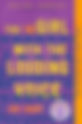
My very favorite books from May! In no particular order, here's the gist of each of the books I most loved reading during the past month: The Princess Diarist, by Carrie Fisher, based upon the diaries she kept as a young woman while stumbling into her iconic lifetime role as Princess Leia; The Invisible Woman, World War II historical fiction by Erika Robuck based on the real-life spy Virginia Hall, a courageous, idealistic, determined, and imperfect heroine I was intrigued by; Great Circle, my favorite read of the month: Maggie Shipstead's interconnected stories about two independent, defiant, appealingly strong young women split by time; Hour of the Witch, Chris Bohjalian's historical thriller with rich details of life in 1662 Boston, strong female characters, and an infuriating witch trial; Who Is Maud Dixon? Alexandra Andrews's twisty-turny mystery about a reclusive author and the ambitious assistant she takes under her wing; An Altar in the World, Barbara Brown Taylor's book about finding faith, moments of reflection, and meaning in the natural world and in everyday tasks; The Girl with the Louding Voice, Abi Daré's story about a young Nigerian woman determined to have her say in the world and emerge from her oppressive situation; and The Forgotten Kingdom, the second great book in Signe Pike's Lost Queen trilogy, which is set in sixth century Scotland. What are some of your recent favorite reads--or books you've read recently that weren't for you? Let's do some Bossy book talking! 01 The Princess Diarist by Carrie Fisher In The Princess Diarist, Carrie Fisher considers the phenomenon of Star Wars, which drew her into its unprecedented whirlwind when she was just nineteen; her middle-aged embracing of Comic-Con, her passionate fans, and the odd familiarity they feel with her because of their love for Leia; and her youthful obsession and affair with the gruff (and married) Harrison Ford. Fisher is candid, funny, charmingly offbeat, and she's mastered the art of honest self-examination. I loved listening to her fantastically raspy voice as she read her memoir in audiobook form and feel like listening to this one is the only way to go. I laughed out loud repeatedly at Fisher's good-natured, self-deprecating, and confidently oddball views and contemplations. For my full review of this book, please see The Princess Diarist. 02 The Invisible Woman by Erika Robuck The Invisible Woman is historical fiction about the real-life World War II-era spy Virginia Hall. Erika Robuck makes Hall appealingly realistic, with faults, desires, idealism, and an astounding baseline level of bravery that leads to realistically messy, sometimes tragic situations--and occasionally glorious victories. Hall, an American working for the UK, was a trainer in the French Resistance despite the physical limitations caused by her prosthetic leg (which she gained following a shooting accident). She's entrenched in enemy territory sending coded messages and drumming up supporters for the cause for longer than most agents manage to survive, so she has a persistent feeling of living on borrowed time. Robuck shaped the real-life figure of Virginia Hall into a courageous, idealistic, determined, and imperfect heroine I was intrigued by. For my full review of this book, please see The Invisible Woman. 03 Great Circle by Maggie Shipstead Great Circle was my favorite read of the month! Maggie Shipstead's story spans the wilds of Prohibition-era Montana, the blustery Pacific Northwest, the unforgiving chill of Alaska, the glitz and glamour of Hollywood and the movie-making business, and the stark, brutal dangers of Antarctica, from the early twentieth century to modern day. In interconnected stories--which felt equally compelling to me--Shipstead brings to life these disparate places and times and focuses on various colorful characters within them. The author has created two independent, defiant, appealingly strong young women split by time (and, secondarily, created complex male characters they each love as family or romantic partners). Shipstead is a wonderful writer, and I loved every word of this. Both of the timelines had me hooked. I received a prepublication copy of Great Circle courtesy of Knopf Publishing Group and NetGalley. For my full review of this book, please see Great Circle. 04 Hour of the Witch by Chris Bohjalian Hour of the Witch is a thoroughly researched historical thriller with rich details of life in 1662 Boston. Mary Deerfield is a twenty-four-year-old, faithful Puritan wife trying to escape her violent, often drunk husband, who is a widower twice her age. Then Mary finds herself embroiled in a witch trial. Bohjalian traces infuriating injustices perpetuated against the book's female characters--who, like the real-life women of the time, are largely powerless and often not considered autonomous beings. Mary's foul treatment by her husband--and the community's unwillingness to protect her--may have you roiling with rage, but just know that Mary has a fiery spirit and some tricks up her sleeve, and she doesn't intend to go quietly. I received a prepublication copy of this book courtesy of Doubleday Books and NetGalley. If you like stories about witches, you might like the books on the Greedy Reading List Six Wonderfully Witchy Stories to Charm You. For my full review of this book, please see Hour of the Witch. 05 Who Is Maud Dixon? by Alexandra Andrews When young, ambitious Florence implodes her burgeoning publishing career during a destructive whim, then lucks into a position as a personal assistant to the reclusive, anonymous, bestselling author with the pen name of Maud Dixon, she can't believe it--everything is starting to fall into place. "Maud" strikes Florence as an oddball genius, and Florence is just trying to soak up all the culture and knowledge she can as she plans to write her own bestseller. That is, until it becomes clear that things with Maud--and with Maud's professional and private situation--aren't at all what they seem. Maud Dixon has clever twists and turns that I didn't see coming and offers interesting gray areas regarding the roles of hero and villain. For my full review of this book, please see Who Is Maud Dixon? 06 An Altar in the World by Barbara Brown Taylor After leaving her position as a pastor and writing a book, Leaving Church, about the experience, Taylor here explores finding faith, moments of reflection, and meaning in the world around her in An Altar in the World. Through exploring everyday chores--practices as simple as walking, washing, praying, or bestowing simple blessings--Taylor explores the ways she grounds herself in everyday life while connecting with deeper meaning. I love Taylor's voice and am in for all of her books. Taylor also wrote the wonderful book Holy Envy, which I read with the same group as I did this book. I adore spending time with this author. She's wise but unassuming, knowledgeable and open to new experiences, funny and self-deprecating. For my full review of this book, please see An Altar in the World. 07 The Girl with the Louding Voice by Abi Daré Adunni is a young teen growing up in a rural Nigerian village where girls are often married off by age fourteen and are frequently made to stop attending school even earlier in life. She's curious, talkative, joyful, and full of song. Her difficult young life threatens to break her, but she persists in trying to find her voice and finding a voice for other women. Adunni experiences tremendous emotional, physical, familial, and societal hardships, yet she keeps her sights set on getting back into school and escaping the grim, constricting situations she's been forced into. She's a tough young woman determined to have her say in the world and emerge from her oppressive situation, and she's wonderfully dogged, creative, and spirited. My friend Kirstan recommended this book, and I listened to it as an audiobook, which I adored. For my full review of this book, please see The Girl with the Louding Voice. 08 The Forgotten Kingdom by Signe Pike This is Pike's second book in The Lost Queen trilogy. Set in sixth century Scotland, The Forgotten Kingdom traces the story of Languoreth, a strong, imprisoned queen; her twin brother Lailoken (who eventually becomes the legendary character of Merlin); and the complicating factors of bloodthirsty vengeance and war between Languoreth's husband and his allies and Lailoken's master and his own allies. This is epic. It's captivating without being melodramatic, romantic without any overdone elements, and wonderfully steeped in legend. I loved Pike's first novel in this series, The Lost Queen, and this book reminded me of The Mists of Avalon and Outlander. This book was right down my alley in tone, character development, and detail. For my full review of this book, please see The Forgotten Kingdom.
- Review of The Girl with Stars in Her Eyes by Xio Axelrod
Axelrod offers a light fiction romance that's heavy on engaging passages about making music, band life, and tricky interpersonal dynamics. The Girl with Stars in Her Eyes tells the story of Toni Bennette (she's heard all the jokes before, so don't even start) and her dream to make it big with her band, the Lillys. Toni grows up feeling like a painful afterthought to her mother's desperate efforts to advance her own struggling musical career, yet Toni can't avoid the pull of the music business for herself. Young Toni crosses paths with Sebastian Quick, an older, wiser guy who just might offer her a way out of her little no-name town--and together they just might have a shot at something bigger. But when Seb leaves town without warning, Toni's left cobbling together a plan for musical success without him in the mix--and trying to heal a broken heart. Cut to years later, when Toni, making a name for herself in the Philadelphia indie music scene, tries out for a hot new band. She loves the band's feminist vibe--but the group's manager is someone from her past: Seb. Tricky situations ensue! Axelrod offers a light fiction romance that's heavy on engaging passages about making music, band life, and tricky interpersonal dynamics. These were my favorite elements. There's also draaama, drawn-out aaangst, and romaaance, plus some steamy-racy scenes. A hopeless, neglectful guy transforms into a seemingly redeemable fellow at unbelievable, warp speed--but I didn't mind. You just know some version of things will turn out satisfyingly here, and it's clear from the get-go that The Girl with Stars in Her Eyes will hit the spot. I received a prepublication copy of this book, published May 4, 2021, courtesy of Sourcebooks Casablanca and NetGalley. Do you have any Bossy thoughts about this book? Axelrod has numerous other books, so if you're in for this one you have many more offerings from her to try. The author plans to write more books in The Lillys series. If you like fiction about bands and music, you might like the books on the Greedy Reading List Six Rocking Stories about Bands and Music.
- Review of The Forgotten Kingdom by Signe Pike
This is captivating without being melodramatic, romantic without any overdone elements, and wonderfully steeped in legend. This is Pike's second book in The Lost Queen trilogy. Set in sixth century Scotland, The Forgotten Kingdom traces the story of Languoreth, a strong, imprisoned queen; her twin brother Lailoken (who eventually becomes the legendary character of Merlin); and the complicating factors of bloodthirsty vengeance and war between Languoreth's husband and his allies and Lailoken's master and his own allies. Family is pitted against family; those who worship the old gods clash against those who embrace Christianity; and political alliances falter and reform in unexpected patterns. The details of everyday life are fantastic, and some characters wield magic and hold mysterious powers. There's appealing feminism--there are cultures of Wisdom Keepers and islands of strong women training to use their special sight. Plus, the man who will become King Arthur (Artur) makes a dreamy appearance and assists in saving the day. This is epic. It's captivating without being melodramatic, romantic without any overdone elements, and wonderfully steeped in legend. I loved Pike's first novel in this series, The Lost Queen, and this book reminded me of The Mists of Avalon and Outlander. I was at the beginning of the second book in a different series (A Court of Thorns and Roses) and was on the fence about continuing that one. Diving into this book cemented my feelings that the other was just too dramaaaaaatic for my taste. However, this book is right down my alley in tone, character development, and detail. Do you have any Bossy thoughts about this book--or any historical fiction/fantasy series you love? The Lost Queen is currently in development for a television series, which is great news, unless it delays Pike's next book, in which case I am going on the record with mixed feelings.
- Review of The Girl with the Louding Voice by Abi Daré
Adunni is a tough young woman determined to have a voice and emerge from her oppressive situation, and she's wonderfully dogged, creative, and spirited. “My mama say education will give me a voice. I want more than just a voice, Ms. Tia. I want a louding voice,” I say. “I want to enter a room and people will hear me even before I open my mouth to be speaking. I want to live in this life and help many people so that when I grow old and die, I will still be living through the people I am helping.” Adunni is a young teen growing up in a rural Nigerian village where girls are often married off by age fourteen and are frequently made to stop attending school even earlier in life. She's curious, talkative, joyful, and full of song. Being thrust into a polygamous marriage with a husband twice her age--and the sense that she has been sold off by her widowed father for her dowry--isn't enough to break her. The deaths of the few people who show her love and affection slow her down but don't stop her. Being tricked into working as an unpaid, abused slave without freedoms or even time to sleep doesn't make her give up. Adunni just needs that one glimmer; a spark; a single kindness; one person who really sees her to inspire her to keep going, and against all odds she continues to find enough strength to get her through. Adunni experiences tremendous emotional, physical, familial, and societal hardships, yet she keeps her sights set on getting back into school and escaping the grim, constricting situations she's been forced into. She's a tough young woman determined to have a voice and emerge from her oppressive situation, and she's wonderfully dogged, creative, and spirited. My friend Kirstan recommended this book, and I listened to it as an audiobook, which I adored. “Who knows what else tomorrow will bring? So, I nod my head yes, because it is true, the future is always working, always busy unfolding better things, and even if it doesn’t seem so sometimes, we have hope of it.” Do you have any Bossy thoughts about this book? Abi Daré grew up in Lagos, Nigeria, and has lived in the United Kingdom for eighteen years. This is her first book, but hopefully not her last. I'd love to hear what you think about this book!
- Three Books I'm Reading Now, 5/24/21 Edition
The Books I'm Reading Now I'm reading a light fiction book about a dedicated single mom who gives love another try, listening to a fantastic audiobook of Abi Daré's Nigerian-set fiction, and reading the second book in a duology about a tough, big-hearted young female pirate; specifically: The Soulmate Equation, Christina Lauren's newest light fiction about a logical, practical single mom who adores her daughter and has no intention of falling in love again--until becoming involved in a data-driven dating program seems like an irresistible opportunity. The Girl with the Louding Voice, Abi Daré's book about a strong young woman in rural Nigeria who shows grit and humor and is determined to escape her dreary life's path as set out by the men in her life; and Namesake is Adrienne Young's follow-up to Fable, which I raved over in my review last fall. Which books are you reading and enjoying these days, bookworms? 01 The Soulmate Equation by Christina Lauren The Soulmate Equation is the latest book from the writing pair known as Christina Lauren. Single mom Jess is a data analyst. She's good at crunching the numbers for work, taking care of her daughter, and leaning on her grandparents (who raised her) for help, but she's not comfortable with the idea of dating again. Her father wasn't part of her life, her mother disappeared when she was little, and her daughter's father took off when Jess was pregnant. Jess has no optimism or dreams about opening her heart to someone new. But then she hears about a DNA-based, data-driven dating program that makes sense to her--and she's got a 98 percent compatible romantic match. I received a prepublication copy of this book courtesy of Gallery Books and NetGalley. 02 The Girl with the Louding Voice by Abi Daré “My mama say education will give me a voice. I want more than just a voice, Ms. Tia. I want a louding voice,” I say. “I want to enter a room and people will hear me even before I open my mouth to be speaking. I want to live in this life and help many people so that when I grow old and die, I will still be living through the people I am helping.” Adunni is a young teen growing up in a rural Nigerian village where girls are often married off young so their families can gain their dowries, and where girls are frequently forced to stop attending school as Adunni was. Adunni is living through tremendous hardships, yet she keeps her sights set on getting back into school and escaping the polygamous marriage she was forced into at age fourteen. She's determined to gain a voice and emerge from her oppressive situation against all odds, and she's wonderfully spirited, creative, and strong. My friend Kirstan recommended this book, and I love it so far. 03 Namesake by Adrienne Young Namesake is the second and final book in Young's duology about the wonderfully strong, ruthless, clever young female pirate Fable. I adored the first book in the series, Fable, in which the title character relied heavily on her survival skills and guts. She fought to get off the godforsaken island where she'd been stuck for years after her father abandoned her. She's set on finding her father again and on making her way in a rough world made for men in order to set her own path. In Namesake, Fable discovers the truth behind the secrets her mother took to her grave, establishes their link to the dangers facing her people, and must decide whether to prioritize her lost-and-found love or the crew toward whom she's come to feel so loyal.
- Review of Skeletons at the Feast by Chris Bohjalian
There's enough strength, redemption, and beauty amid the World War II suffering to give you warm fuzzies. After recently pulling together the Bossy Bookworm Greedy Reading List Six Great Stories about Brave Women During World War II and then reading Bohjalian's Hour of the Witch last week, I was reminded of Bohjalian's captivating World War II-set novel. The going is tough sometimes--the book is about refugees trying to evacuate west across Germany at the end of World War II to avoid Russian horrors and meet up with British and American forces if they can. But Bohjalian's character development is rich, there are satisfying acts of revenge, and the several instances of bridging differences feel hard-won and real. There's enough strength and redemption and beauty amid the pain and suffering to give you warm fuzzies. Do you have any Bossy thoughts about this book? When I first read Skeletons at the Feast, I was eager to dive into Bohjalian's other books, but clearly I need to keep at it, because aside from Hour of the Witch and the difficult but riveting story The Guest Room, I still haven't read many others I want to: a book about the Armenian genocide that is personal to Bohjalian himself, The Sandcastle Girls, as well as the popular books Midwives, The Flight Attendant, and others. This is the gorgeous cover of the edition of the book I read--and owned at one time--and I adore this one, although I suppose it doesn't necessarily clearly evoke wartime fleeing and the rest of the themes of Skeletons at the Feast:
- Review of An Altar in the World by Barbara Brown Taylor
Taylor's books exploring faith and life's meaning are delights: she is wise but unassuming, knowledgeable yet open to new experiences, and often funny and self-deprecating. “To make bread or love, to dig in the earth, to feed an animal or cook for a stranger—these activities require no extensive commentary, no lucid theology. All they require is someone willing to bend, reach, chop, stir.... And yet these are the same activities that change lives, sometimes all at once and sometimes more slowly, the way dripping water changes stone. In a world where faith is often construed as a way of thinking, bodily practices remind the willing that faith is a way of life.” After leaving her position as a pastor and writing a book, Leaving Church, about the experience, Taylor here explores finding faith, moments of reflection, and meaning in the world around her in An Altar in the World. Through exploring everyday chores--practices as simple as walking, washing, praying, or bestowing simple blessings--Taylor explores the ways she grounds herself in everyday life while connecting with deeper meaning. I love Taylor's voice and am in for all of her books. Do you have any Bossy thoughts about this book? Taylor also wrote the wonderful book Holy Envy, which I read with the same group as I did this book. I loved that book even more than this one because I felt that Taylor's personality came through in it even more fully, and I adore spending time with her. She's wise but unassuming, knowledgeable and open to new experiences, funny and self-deprecating.
- Review of Who Is Maud Dixon? by Alexandra Andrews
Maud Dixon offers clever twists and turns and presents interesting gray areas about the roles of hero and villain. A twisty and turny, compelling read. "By its nature, every secret contains the power to destroy something." Florence Darrow is from small-town Florida, and her aspirations for her life are ambitious yet vague. She feels destined for greatness but not necessarily special enough to make the splash she'd like to in the world--at least not yet. When she implodes her publishing career on a destructive whim, then lucks into a position as a personal assistant to the reclusive, anonymous, bestselling author with the pen name of Maud Dixon, Florence can't believe it--everything is starting to fall into place. "Maud" strikes Florence as an oddball genius, and Florence is just trying to soak up all the culture and knowledge she can as she plans to finally write her own bestseller. That is, until it becomes clear that things with Maud--and with Maud's professional and private situation--aren't at all what they seem. During a research trip to Morocco, weighty questions about identity, reality, motives, and events of the past threaten the lives of both women. This book reminded me a little bit of my recent read The Plot, but Maud Dixon had clever twists and turns that I didn't see coming and offers interesting gray areas regarding the roles of hero and villain. Do you have any Bossy thoughts about this book? I need to talk Maud Dixon with someone who's read it! Did you see things going in the direction they did? Did you suspect certain characters of duplicity--and did you believe they would be able to go through with their plans?
- Three Books I'm Reading Now, 5/18/21 Edition
The Books I'm Reading Now I'm reading a brand-new romance-and-music book that's gotten lots of buzz; a beautiful modern classic from a bestselling author who writes about faith and life; and a recent mystery about an offbeat author that's keeping me guessing and has me completely hooked: Xio Axelrod's novel The Girl with the Stars in her Eyes is about a young woman and her quest for musical stardom (and romantic fulfillment); Barbara Brown Taylor's nonfiction book An Altar in the World celebrates beauty and meaning in the natural world and in everyday moments; and Who Is Maud Dixon? is Alexandra Andrews's first book, and so far the mystery's twists and turns are fantastic. Which books are you reading and enjoying these days, bookworms? 01 The Girl with the Stars in Her Eyes by Xio Axelrod The Girl with Stars in Her Eyes tells the story of Toni Bennette (she's heard all the jokes before, so don't even start) and her dream to make it big with her band, the Lillys. Toni grows up a painful side note to her mother's efforts to advance her own struggling musical career, yet Toni can't avoid the pull of the music business for herself. Young Toni crosses paths with Sebastian Quick, an older, wiser guy who just might offer her a way out of her little no-name town--and together they just might have a shot at something bigger. But when Seb leaves town without warning, Toni's left cobbling together a plan for musical success without him in the mix. Cut to years later, when Toni, making a name for herself in the Philadelphia indie music scene, tries out for a hot new band. She loves the band's feminist vibe--but the group's manager is someone from her past: Seb. Tricky situations ensue! I received a prepublication copy of this book, published May 4, 2021, courtesy of Sourcebooks Casablanca and NetGalley. This is the first in a series by Axelrod about Toni and the Lillys. If you like fiction about bands and music, you might like the books on the Greedy Reading List Six Rocking Stories about Bands and Music. 02 An Altar in the World by Barbara Brown Taylor “To make bread or love, to dig in the earth, to feed an animal or cook for a stranger—these activities require no extensive commentary, no lucid theology. All they require is someone willing to bend, reach, chop, stir.... And yet these are the same activities that change lives, sometimes all at once and sometimes more slowly, the way dripping water changes stone. In a world where faith is often construed as a way of thinking, bodily practices remind the willing that faith is a way of life.” After leaving her position as a pastor and writing a book about the experience, Leaving Church, Taylor here explores finding faith, moments of reflection, and meaning in the world around her in An Altar in the World. Through exploring everyday chores, practices as simple as walking, washing, praying, or bestowing simple blessings, Taylor explores ways she grounds herself in everyday life while connecting with deeper meaning. I love Taylor's voice and am in for all of her books. 03 Who Is Maud Dixon? by Alexandra Andrews Aspiring young author Florence Darrow is from small-town Florida, and her aspirations for her life are ambitious yet vague. She feels destined for greatness but not necessarily special enough to make the splash she'd like to in the world--at least not yet. When she implodes her publishing career on a destructive whim, then lucks into a position as a personal assistant to a reclusive, bestselling author with the pen name of Maud Dixon, she can't believe it--everything is starting to work out for Florence. "Maud" is an oddball genius, and Florence is just trying to soak up all the culture and knowledge she can as she plans her own publishing success. That is, until it becomes clear that things aren't at all what they seem. This book is reminding me a little bit of my recent read The Plot, but so far Maud Dixon has more twists and turns I didn't see coming, as well as interesting gray areas about the roles of hero and villain.
- Review of Hour of the Witch by Chris Bohjalian
Hour of the Witch is a thoroughly researched, witchy, historical thriller with fantastic details of the time. Bohjalian's newest book, Hour of the Witch, published earlier this month, takes place in 1662 Boston, where strong-willed women like main protagonist young Mary Deerfield--especially if they have not yet borne children--are suspicious and frequently considered dangerous. Hour of the Witch is a thoroughly researched historical thriller with fantastic details of the time that focuses on the character of a twenty-four-year-old, faithful Puritan wife trying to escape her violent, often drunk husband, who is a widower twice her age--and the witch trial that followed. Bohjalian traces infuriating injustices perpetuated against the female characters--who like the real-life women of the time, are largely powerless and often not considered autonomous beings. Mary's foul treatment by her husband--and the community's unwillingness to protect her--may have you roiling with rage, but just know that Mary has a fiery spirit and some tricks up her sleeve, and she doesn't intend to go quietly. The community's collective suspicion builds and grows into panic and paranoia, twisting Mary up in its grasp as those around her swarm and snarl, eager to condemn her to death for imagined, feared dark forces. Bohjalian's protagonist Mary straddles the line between meek and mild helpmeet and spirited, strong woman, and I was cheering for her every step of the way--even as I had to resort to deep breathing to read about all she endured as a woman subject to her cruel husband's whims. I received a prepublication copy of this book courtesy of Doubleday Books and NetGalley. If you like stories about witches, you might like the books on the Greedy Reading List Six Wonderfully Witchy Stories to Charm You. Do you have any Bossy thoughts about this book? Bohjalian is also the author of a fantastic book about World War II, Skeletons at the Feast, the difficult but riveting story The Guest Room, and a book about the Armenian genocide that is personal to Bohjalian himself, The Sandcastle Girls, as well as Midwives, The Flight Attendant, and other books I haven't yet read. I mentioned this book--along with Maggie Shipstead's Great Circle and The Book of Delights by Ross Gay--in the Greedy Reading List Three Books I'm Reading Now, 4/28/21 Edition.
- Six Great Historical Fiction Stories about the Civil War
The Civil War Books This painful, terrible time in our nation's history makes for some poignant, brutal, often beautiful storytelling. News of the World and Simon the Fiddler are two more by Paulette Jiles that I've waxed poetic about on this blog, and others on my to-read list include The House Girl by Tara Conklin, March by Geraldine Brooks, Old Abe by John Cribb, Widow of the South by Robert Hicks, Liar, Temptress, Soldier, Spy by Karen Abbott, and Enemy Women by Paulette Jiles. If you like historical fiction, check out these other Bossy Bookworm Greedy Reading Lists: Six Historical Fiction Books I Loved in the Past Year Six Historical Fiction Mysteries to Intrigue You Six Great Historical Fiction Books Set in the American West Six More Great Historical Fiction Books Set in the American West Have you read any of these books? I'd love to hear what you thought! And which other books should I add to my Civil War historical fiction to-read list? 01 The Color of Lightning by Paulette Jiles This beautiful, heartbreaking book. It's set toward the end of the Civil War on the Texas plains, centering around the bare-bones but amazing basic facts known about the real life of a freed black man—with the details of his life imagined and elaborated on in fantastic form by the author, and many other richly created characters that make the story come to life. Absolutely brutal and vivid details of Native Americans’ physical brutality are depicted; naive and uninformed eastern urban white men’s ideas and outrageously rigid ideas meant to “civilize” western Indians are gradually undone; complexities and brilliantly laid out fundamental differences in white and Native American life views are gracefully explored; white-Indian friendships fraught with potentially lethal misunderstanding but incredible trust and humor are imagined; and the tragic and multilayered reasons for the undoing of any hope of white-Indian coexistence build slowly to a tragic end. The dreams of many of the key characters and self-reflections are lovely and illuminating and poignant. Jiles turns assumptions on their heads: untested characters find they are capable of incredible grit—and other idealist characters find themselves crushed and without any of the basic answers about justice and life they were once confident in. This book broke my heart and I just adored it. I reviewed it here. Jiles also wrote the wonderful News of the World and Simon the Fiddler. 02 Fallen Land by Taylor Brown Taylor Brown's debut novel is set in the final year of the Civil War. Callum, an Irish horse thief, fled to America an orphan at fifteen years old. Ava's family is gone, killed by war. The young couple find one another and bond to each other in their desperate run to escape the devastated South. They encounter the fiery ruin of Sherman's March on their way to safety and a new life, and their love is one beautiful light in the darkness of the country's ravaging war. I was stressed reading Ava and Callum's circumstances, but the preciousness of lives lived moment by moment (while the characters fight for survival--and also attempt to live as good people and find love and joy) was wrought beautifully by Brown. Their perspective of coming upon the devastation immediately after Sherman's March through Atlanta was particularly shocking and affecting. This is a rough yet sometimes tender story set at the end of the Civil War, amid the confusion and desperation and cruelty and kindnesses of that time. Brown also wrote the wonderful Gods of Howl Mountain and also Pride of Eden, which is on my to-read list. 03 Wilderness by Lance Weller “I'm American. Like I told you. And I'm American and not something else because they failed that day. They couldn't do it and most of them probably knew they couldn't do it before they even started, but they went anyhow. There's honor in that. I don't reckon there's much honor left in the world now, but they had it that day and I honor them on both sides by knowing what I can about it. Much as I can.” Weller's Wilderness is set several decades after the Civil War, but the story pivots on Abel Truman's experiences in the Civil War's Battle of the Wilderness and how they shaped his life, led him to the wilds of Washington state, and set him on what is likely his final journey. This took me a while to get into, but I'm so glad I didn't give up on it. I loved the merging of stories and the luminous writing about tragedy, evolution of character, and boundless love--this is a gorgeous story. Weller has developed a graphic novel adaptation of this book, to be published this year. 04 Gilead by Marianne Robinson “I wish I could leave you certain of the images in my mind, because they are so beautiful that I hate to think they will be extinguished when I am. Well, but again, this life has its own mortal loveliness. And memory is not strictly mortal in its nature, either. It is a strange thing, after all, to be able to return to a moment, when it can hardly be said to have any reality at all, even in its passing. A moment is such a slight thing. I mean, that its abiding is a most gracious reprieve.” Marilynne Robinson's Gilead chronologically precedes her novel Lila and takes the form of the aging Reverend's recollections and letters to his young son. The book spans generations of fathers and sons from the Civil War to the twentieth century, includes reflections about the war, and it's a beautiful book, so I decided that it's going on my Civil War list. Gilead is largely an exploration of the Reverend's complicated relationship with his troubled young namesake and the evolution of his faith and preaching. This is a gentle, slow-paced story from the heart-wrenchingly gorgeous writer. 05 Daughter of a Daughter of a Queen by Sarah Bird Bird's Daughter of a Daughter of a Queen is based on the story of a real-life female Buffalo Soldier, Cathy Williams, with many liberties taken for the sake of shaping a story. I was happy to suspend my disbelief at the many conveniently outlandish circumstances or coincidences—which led key characters to cross unlikely paths, caused characters to avoid making important discoveries until the timing was more convenient to the arc of the tale, or set events essential to a resolution in a magical otherworld to allow imagined outcomes. Bird does an excellent job of keeping up the tension and making clear the high stakes of Williams’s enormous secret and the destruction that would befall her if it came out. She explores in fascinating detail the hardscrabble life of a newly freed Black person—and the often desperate circumstances of women (especially Black women) without men to protect them at the time. The major and minor love stories are sweet and tragic on multiple levels. I also mentioned this book in the Greedy Reading List Six Historical Fiction Novels I Loved in the Past Year. 06 Lincoln in the Bardo by George Saunders “Only then (nearly out the door, so to speak) did I realize how unspeakably beautiful all of this was, how precisely engineered for our pleasure, and saw that I was on the brink of squandering a wondrous gift, the gift of being allowed, every day, to wander this vast sensual paradise, this grand marketplace lovingly stocked with every sublime thing.” The premise of Lincoln in the Bardo, which the reader quickly grasps, is that the characters are caught in limbo, somehow unaware of and in denial about their earthly demises, and they repeat the same patterns and manipulations while making mental excuses for their diminished or changed states, all the while waiting for (impossible) opportunities to "feel better" and return to their lives. The construction (short, often one-line passages followed by the speaker's name) of Lincoln in the Bardo could've been clunky, but the characters' voices were distinct enough to work. This is twisted, base, and funny, but sometimes also sentimental and poignant, with peeks into deceased characters' pivotal life moments as well as hypothetical looks into Lincoln's frame of mind and motivation as he struggled with his personal losses and feelings of responsibility for the significant loss of life on both sides during the Civil War. The character growth surprised me and felt in line with the tone and pacing of the story. This was unusual and fascinating all around.
- Review of The Water Dancer by Ta-Nehisi Coates
Coates took his time building the story, and I felt as though he deliberately kept us in a plodding pace to emphasize the unwavering, repetitive misery of The Tasked. Coates's The Water Dancer explores the relentless oppression and hopelessness of slavery, the resigned existence of the imprisoned, masters' willful brutality--although the horrors here are largely slow builds rather than violently wrought--and the spark to escape that persists. The Water Dancer traces the life of Hiram Walker, a "Tasked" man (the word "slavery" is rarely used in the book) living and working on a Virginia plantation. His mother died when he was young, and he has no memory of her. But the white master of the plantation is Hiram's biological father, and composed young Hiram is set up as a companion to his foolish white half-brother (his father's heir). Hiram's lineage is acknowledged, and he shows himself to be far more intelligent and capable than his white brother--as well as preferred company for his father--yet racial barriers are rigid and clear. He may not inherit, nor may he rise above his station as owned and commanded by his white master. Coates intersperses bursts of magical realism that promise an unexpected path to freedom, but in order to take advantage of these, Hiram must learn to understand and master his mysterious powers that allow for shifts in time and space. The Underground wishes to use his powers toward their own ends--which often coincide with Hiram's--but when their desired paths diverge, he must take ownership of his abilities for himself, reckoning with consequences and his own secure conscience. The white savior character of Corinne is faulted and imperfect, yet I found myself bristling at her presence in the story. The weight put upon Hiram's inability to remember early moments with his mother felt unfair and its resolution felt too convenient. The book was a slow mover; Coates took his time building the story, and I felt as though he deliberately kept us in a plodding pace to emphasize the unwavering, repetitive misery of The Tasked. There's a lot of thinking and considering and talking with short bursts of change or brief moments in which plans are enacted. The pacing suited the situation being explored, of the trapped and enslaved, but it was a struggle to read at times and made me impatient. The brief author's note mentions Coates's inspiration of the real-life Still family for the family portrayed in The Water Dancer but refers the reader to other sources for more information. Do you have any Bossy thoughts about this book? I listened to this as an audiobook, and Joe Morton's narration was excellent. Ta-Nehisi Coates also wrote the memoir Between the World and Me. I mentioned this book (along with The Plot and Forgotten Kingdom) in the Greedy Reading List Three Books I'm Reading Now, 5/10/21 Edition.
- Review of The Plot by Jean Hanff Korelitz
This is a fast, compelling read, and I tore through it at top speed to find out the Big Reveals. I predicted some of the story, but other aspects were wonderfully shocking. This book made me verrry nervous. Reading about lying and stealing makes me very stressed out, so I was biting my nails while reading Korelitz's story. Jacob Finch Bonner (he added the "Finch" himself once his aspirations to become a writer became all-encompassing) wrote a well-received first book as a young man, but now he's nearing middle age and his career has fizzled. He teaches writing at a third-tier university and isn't even working on anything new--not that any agents or publishers are particularly interested. An obnoxiously confident student who's cagey about what he feels is a slam-dunk bestseller book idea reluctantly confides in Bonner about his plot concept. When the student abruptly dies soon afterward without publishing his book, Bonner banks on the probability that the young man hadn't entrusted details about his book to anyone else. He decides to take a risk: he'll use his student's concept and aim to create a bestseller of his own. He's writing the whole thing himself. So he's not stealing, right? It's completely fine. Everything is going to be fine. You can't copyright a plot anyway, right? RIGHT? Do you think this terrible decision-making comes back to haunt Jacob Finch Bonner? Yes, bookworms. YES, IT DOES. And my heart raced while I read to find out if this fraught situation would blow up in fantastic form. I didn't predict the plot within the plot before it was alluded to (about 60 percent of the way through the book), and I found it deliciously chilling. I did, however, anticipate other key elements of the story from pretty early on. I also wasn't sure that certain driving forces of Korelitz's story made sense (why would anyone in this scenario harass Bonner rather than leaving the situation alone, unless it was clearly revenge?). But this is a fast, compelling read, and there was no chance I wasn't going to tear through it at top speed to find out the Big Reveals. Korelitz prods at the question of the ownership of ideas while taking readers down the uncomfortable path of a protagonist who steals, feels terrible guilt, rationalizes his actions, and emerges with defensive self-righteousness. Ironically, Bonner's theft opens the door to romantic love and building trust with others in his life, and to a more open and heartfelt relationship with his parents, along with his incredible professional success. I received a prepublication copy of this book, published May 11, 2021, courtesy of NetGalley and Celadon Books. Do you have any Bossy thoughts about this book? My mom told me about a movie with a plot centering around a stolen book idea, The Words (starring Bradley Cooper and Dennis Quaid, so I believe I need to watch this immediately). I wonder how that story might compare to this one? Korelitz is also the author of The Undoing, Admission (I read and really liked that one), and other books.
- Review of Great Circle by Maggie Shipstead
Shipstead has created two independent, defiant, appealingly strong young women split by time. I was hooked on both story lines and just loved this. Great Circle spans the wilds of Prohibition-era Montana, the blustery Pacific Northwest, the unforgiving chill of Alaska, the glitz and glamour of Hollywood and the movie-making business, and the stark, brutal dangers of Antarctica, from the early twentieth century to modern day. In interconnected stories--which felt equally compelling to me--Shipstead brings to life these disparate places and times and focuses on various colorful characters within them. Great Circle traces events starting with a sinking ocean liner in 1914 and the introduction of Marian and James, twin babies rescued from that tragedy; it follows the path of the twins' lives as they grow up; the story tracks young Marian's ignited passion for aviation and her adventures; and the book injects a modern-day story line in which a famous young actress takes on the role of Marian for a film. Shipstead has created two independent, defiant, appealingly strong young women split by time (and, secondarily, the complex male characters they each love as family or romantic partners). Both of the main characters are orphans, both were raised by indulgent, imperfect uncles, and both are constantly reinventing themselves as they aim to live fulfilling lives, but otherwise their situations are altogether different. Shipstead is a wonderful writer, and I loved every word of this. Both of the timelines had me hooked. Do you have any Bossy thoughts about this book? I mentioned this book in the Greedy Reading List Three Books I'm Reading Now, 4/28/21 Edition. I received a prepublication copy of Great Circle courtesy of Knopf Publishing Group and NetGalley. Shipstead is also the author of Astonish Me and Seating Arrangements.
- Three Books I'm Reading Now, 5/10/21 Edition
The Books I'm Reading Now I'm listening to The Water Dancer, Ta-Nehisi Coates's novel about slavery, with magical realism that offers a possible path to freedom; I'm reading The Plot, Jean Hanff Korelitz's upcoming novel about a has-been writer who steals a plot idea and emerges a bestselling author haunted by his secret; and I'm reading The Forgotten Kingdom, the second in Signe Pike's fantastic series set in sixth century Scotland (The Lost Queen is the first). Which books are you reading and enjoying these days, bookworms? 01 The Water Dancer by Ta-Nehisi Coates Coates's The Water Dancer explores the relentless oppression and hopelessness of slavery, the resigned, broken existence of the imprisoned, the masters' willful brutality, and the spark to fight that persists in some who have been hurt and pushed down for generations. The Water Dancer traces the life of Hiram Walker, a "Tasked" man (the word "slavery" is rarely used in the book) living and working on a Virginia plantation. His mother died when he was young, and he has no memory of her. But the white master of the plantation is Hiram's biological father, and composed young Hiram is set up as a companion to his foolish white half-brother (his father's heir). Hiram's lineage is acknowledged, and he shows himself to be far more intelligent and capable than his white brother, yet racial barriers are rigid and clear. He may not inherit, nor may he rise above his station. Coates intersperses bursts of magical realism that promise an unexpected path to freedom, but in order to take advantage of these, Hiram must learn to understand and master his mysterious powers that allow for shifts in time and space. I'm listening to this as an audiobook and this is a slow mover so far; Coates is taking his time building the story. The author also wrote the memoir Between the World and Me. 02 The Plot by Jean Hanff Korelitz This book is making me verrry nervous so far. Jacob Finch Bonner (he added the "Finch" himself once his aspirations to become a writer became all-encompassing) wrote a well-received first book, but now his career has fizzled. He teaches writing at a third-tier university and isn't even working on anything new--not that any agents or publishers are interested. An obnoxiously confident student cagey about what he feels is a slam-dunk bestseller book idea confides in Bonner about his plot. When the student abruptly dies soon afterward, Bonner banks on the probability that he hadn't trusted anyone else with details about his book. He decides to take a risk: he'll use his student's concept and aim to create a bestseller of his own. You can't copyright a plot anyway, right? RIGHT? Do you think this terrible decision-making comes back to haunt Jacob Finch Bonner? Yes, bookworms. YES, IT DOES. I received a prepublication copy of this book, to be published May 11, 2021, courtesy of NetGalley and Celadon Books. 03 The Forgotten Kingdom by Signe Pike This is Pike's second book in The Lost Queen trilogy. Set in sixth century Scotland, The Forgotten Kingdom traces the story of Languoreth, a strong, imprisoned queen; her twin brother Lailoken (the inspiration for the character of Merlin); and the complicating factors of bloodthirsty vengeance and war between Languoreth's husband and his allies and Lailoken's master and his own allies. Family is pitted against family; those who worship the old gods clash against those who embrace Christianity; and political alliances falter and reform in unexpected patterns. The details of life at the time are wonderful, and some characters wield magic and hold mysterious powers. This is epic. I loved Pike's first novel in this series, The Lost Queen, and so far this book is reminding me of The Mists of Avalon and Outlander.
- Six Foodie Memoirs to Whet Your Appetite
It's time for the foooood books! The shout-out: this Greedy Reading List theme was suggested by my lovely longtime friend, fellow book lover, and stalwart Bossy Bookworm supporter, Judy! Let's all hear it for Judy! :) I love a memoir, and I love reading about people doing what they love, and I also love eating. So I therefore love memoirs written by chefs and by people who are obsessed with food, and the books listed here are some of my favorites in this category. I included two books by Ruth Reichl here. (Frankly I could have included a third, making this a 50 Percent Ruth Reichl List, but that felt a little aggressive.) If you've read Reichl's books, you may understand why this had to happen. Meanwhile, the three books shown below are at the top of my foodie memoir to-read list, and I can't wait to give them a go too. If you like memoirs, check out these Bossy Bookworm Greedy Reading Lists: Six Illuminating Memoirs to Dive Into, Six Illuminating Memoirs I've Read This Year, and Six Powerful Memoirs about Facing Mortality. Have you read any of these books? I'd love to hear what you thought! And which other books should I add to my food memoir to-read list? 01 Garlic and Sapphires: The Secret Life of a Critic in Disguise by Ruth Reichl Garlic and Sapphires may be my favorite foodie memoir of all. Ruth Reichl was editor in chief of Gourmet and a world-renowned food critic for The New York Times, and her tenure there is the focus of this book. Staying unrecognized as a food critic was essential to Reichl's ability to properly assess the level of service and the food quality everyday patrons would receive at any given restaurant, and she resorted to various disguises and decoy ploys to guard her anonymity. Her costuming and taking on of alternate personalities felt farcical, but I adored it. Reichl explores how one's appearance affects how others treat you--not a revolutionary concept, but I found it fascinating when applied to the class and financial factors involved with fine dining. She takes the snobbery out of food criticism, however, regularly visiting low-key restaurants as well. Reichl comes across as incredibly appealing and unassuming. She reveals absurdities and excesses in the restaurant world while clearly remaining the head of the Food Fan Club (I made that up, but she is a big food fan) and unfailingly celebrating the deep joy that good food, friendly company, and an appealing restaurant atmosphere can inspire. 02 The Language of Baklava by Diana Abu-Jaber "It’s so hot that it steams in your mouth, and at first you eat it with just the tips of your teeth. Then the layers of crisp and sweet and soft intermingle, a series of surprises. It is so rich and dense that you can eat only a little bit, and then it is over and the knaffea is just a pleasant memory—like a lovely dream that you forget a few seconds after you wake." In The Language of Baklava, Abu-Jaber explores her heritage through describing in poetic terms meals and foods that are important to her. She reflects on what it means to be Jordanian-American, and through recounting her own journeys as well as her father's life, she comes to find peace with who she is and where she's been. Abu-Jaber made me hungry while drawing me into her history, with recipes special to her placed strategically throughout. Each of the foods she showcases is directly linked to her life in some way. The author writes beautifully, whisking the reader off to Jordan, to upstate New York, and back again, illustrating the melding of her cultures. The tone of the book is joyful and vibrant, and Abu-Jaber intermingles thoughts on faith and family (and conflicts related to both) by using food as the touchpoint for many of her life events. 03 Kitchen Confidential: Adventures in the Culinary Underbelly by Anthony Bourdain I love behind-the-scenes books, especially those about food. I wondered at first if Bourdain's "I'm tough, I've been pretty screwed up at times, and I'm also sometimes shocking, so take me or leave me" (I'm paraphrasing) attitude was going to overshadow the meat (see what I did there?) of the book, in which case I might have been tempted to abandon it. He does have sordid tales to tell, but he seems less puffed up over his kitchen war stories after the first section of the book, and that's when I felt I could settle into taking in his rich, attention-getting experiences. I found the sections about a day in the life of Bourdain's kitchen and a day in the life of a three-star kitchen to be the most captivating. I pledged after reading this book I wasn't going to forget to not eat fish on Sunday or Monday because of supply and delivery patterns (I did forget this, but now after rereading my original review I'm reminded again). I also had the post-book goal of trying to block from my mind most of the gross-out kitchen tales Bourdain told--and that plan of mine did work, because I can still bring myself to eat at restaurants. I find myself retroactively feeling greater affection for this book than I originally did when reading it. I read Kitchen Confidential thirteen years ago, well before I spent endless evenings happily watching multiple television series featuring Anthony Bourdain traveling the world, inserting himself into both familiar and previously unknown-to-him food stalls, restaurants with Michelin star ratings, and everything in between. I really fell for Bourdain watching him in action on television--witnessing his bristly manner and his unabashed adoration for the chefs and the kitchen staffs aiming to bring culinary magic to the plate. I found his framework of knowledge along with his wonder about the foods and cultures he was exploring irresistible. This book may have felt a little unpolished to me--but Bourdain himself was unabashedly rough around the edges too. 04 A Homemade Life: Stories and Recipes from My Kitchen Table by Molly Wizenberg "When Molly Wizenberg's father died of cancer...she went to Paris, a city that held vivid memories of a childhood trip with [him]. She was supposed to be doing research for her dissertation, but more often, she found herself peering through the windows of chocolate shops, trekking across town to try a new pâtisserie, or tasting cheeses at outdoor markets, until one evening when she sat in the Luxembourg Gardens reading cookbooks until it was too dark to see, she realized that her heart was not in her studies but in the kitchen." Wizenberg started out as a food writer who wrote about home cooking, the meaning of food in the home, and its significance in relationships. This book made me love Molly Wizenberg. I was fascinated by her life, and I found her writing voice endearing and real and funny. Her manageable yet unusual recipes looked delectable. Wizenberg has more recently written a memoir about marriage, unexpected yearnings, and the messy process of finding herself again after losing her way; for my review of that book, see The Fixed Stars. Between these two books she wrote Delancey, about owning a restaurant with her husband. 05 Animal, Vegetable, Miracle: A Year of Food Life by Barbara Kingsolver "Author Barbara Kingsolver and her family abandoned the industrial-food pipeline to live a rural life—vowing that, for one year, they'd only buy food raised in their own neighborhood, grow it themselves, or learn to live without it." I like that Kingsolver is careful to lay out the baby steps of her shifting views of food and of her process for growing or obtaining her family's sustenance. Her tone seems useful for readers who may not have gardens, much less farms, and who may looking to live vicariously through the details of her experience but also come away with simple steps they might take in their own lives. Kingsolver provides ideas for not only how to eat conscientiously (without being too rigid) but also for how to become more aware of issues surrounding local eating and how to effect change. I found her teenage daughter's sections irritating, but it has to be tough to be a teenager drawn into Famous Author Mom's whirlwind. 06 Tender at the Bone: Growing Up at the Table by Ruth Reichl Here's the second Ruth Reichl title on this short list, but please recall from my introduction to the list that I really could have included three of her books and not have been sorry about it. So this second listing is actually evidence of my restraint. Reichl traces the roots of her interest in food, cooking, connecting, family, and the intersections of each of these elements. She credits those who shaped her culinary journey: the Queen of Mold (her mother, a notorious food poisoner); the chefs who introduced her to the indelible tastes and experiences that shaped her cooking and her culinary views; and those involved in the organic food movement and its 1970s beginnings. Reichl includes her own photographs and some of her favorite recipes, which together make the book feel like a special peek into both her personal and professional influences. Reichl is appealingly imperfect, down-to-earth, and a wonderful storyteller--when she's writing about her life and about food, I'm always glad to be along for the ride.
- Review of The Invisible Woman by Erika Robuck
Robuck shaped the real-life figure of Virginia Hall into a courageous, idealistic, determined, and imperfect heroine I was intrigued by. “Because it will get worse before it gets better,” says Mimi. “If it gets better. And then, even if it ends, think of all the people emerging from the rubble. Think of the women and children. All the empty places at dinner tables. The resentment between those who collaborated and those who resisted. The remorse for the things we’ve done that we thought were justified by the ends. We will all be called to account.” The Invisible Woman is historical fiction about the real-life World War II-era spy Virginia Hall. Erika Robuck makes Hall appealingly realistic, with faults, desires, idealism, and an astounding baseline level of bravery that leads to realistically messy, sometimes tragic situations--and occasionally glorious victories. Hall, an American working for the UK, was a trainer of the French Resistance despite the physical limitations caused by her prosthetic leg (which she gained following a shooting accident). She's entrenched in enemy territory sending coded messages and drumming up supporters for the cause for longer than most agents manage to survive, so she has a persistent feeling of being on borrowed time. Her desire for vengeance against a man who has betrayed the cause has motivated her to continue slogging through difficult, dangerous, exhausting situations and never sleeping, resting, or eating enough. She's beginning to wonder if good can possibly overcome evil in this interminable war, but her ragtag group of brave civilian resistors is the inspiration she needs to keep going. Robuck has shaped Hall into a courageous, idealistic, determined, and imperfect heroine I was intrigued by. I really enjoyed Robuck's writing style, the details of the time, the pacing of the book's events, and the rich cast of secondary characters she brought to life. Do you have any Bossy thoughts about this book? If you like reading about female spies, you might like some of the books on the Greedy Reading List Six Books about Brave Female Spies.
- Review of The Princess Diarist by Carrie Fisher
I laughed out loud repeatedly at Fisher's good-natured, self-deprecating, and confidently oddball views and contemplations. The Princess Diarist is based upon the diaries Carrie Fisher kept while she was a young woman stumbling into her iconic lifetime role as Princess Leia. Fisher is candid, funny, charmingly offbeat, and she's mastered the art of honest self-examination. I loved listening to her fantastically raspy voice as she read her memoir in audiobook form, and I'd love to spend time listening to her no matter what she might be discussing. Here, Fisher considers the phenomenon of Star Wars, which drew her into its unprecedented whirlwind when she was just nineteen; her middle-aged embracing of Comic-Con, her passionate fans, and the odd familiarity they feel with her because of their love for Leia; and her youthful obsession and affair with the gruff (and married) Harrison Ford, who is a main topic of her teenaged diaries. She hadn't discussed their romantic relationship until this book, and she seems to still be considering its nature (and the mismatch of their personalities and lifestyles) from the vantage point of this moment decades afterward. I felt like a little too much time may have been spent on sharing youthful poetry and fanciful teenaged musings (in the audiobook these were read by a different, younger person), yet the young Carrie seemed frequently and charmingly self-possessed even as she questioned her own motives, feelings, and life path. I laughed out loud repeatedly at Fisher's good-natured, self-deprecating, and confidently oddball views and contemplations. Do you have any Bossy thoughts about this book? If you love Carrie Fisher, you might also like A Star is Bored, a fictionalized celebrity-focused book written by Carrie Fisher's former personal assistant, Byron Lane. It was fun but also poignant, and I loved it.
- April Wrap-Up: My Favorite Reads of the Month
My very favorite books from April! In no particular order, here's the gist of each of the books I most loved reading during the past month: When the Stars Go Dark, Paula McLain's newest, about a missing persons detective who experiences a personal tragedy and dives into solving the disappearances of young women in her hometown; The Book of Delights, Ross Gay's joyful, playful, mischievous, and never cloyingly sweet book of essays about joy and wonder; The Survivors, Jane Harper's newest Australia-set, character-driven mystery, in which a past accident and a new tragedy haunt a tightly knit community; A Deadly Education, the first in Naomi Novik's series about a dark, magical school with two routes out: a grueling path to graduation and beyond, or death; Normal People, Sally Rooney's popular book (now a TV show) about two young people in Ireland and their instinctual, sometimes confused, always heart-wrenching connection; The Echo Wife, Sarah Gailey's sci-fi book about betrayal and complicated, unexpected loyalty; and What Beauty There Is, Cory Anderson's debut, a young adult story about darkness, desperation, and brave young characters cobbling together hope. What are some of your recent favorite reads--or books you've read recently that weren't for you? Let's do some Bossy book talking! 01 When the Stars Go Dark by Paula McLain Anna is a San Francisco missing persons detective in denial about the fact that her job has overtaken her personal life for years. When she experiences a personal tragedy, she flees to the Northern California of her childhood--a place she's avoided since her teens. She arrives hoping for anonymity and an escape to the woods to grieve and be alone, but she quickly finds out that a young local woman has gone missing. Old friends resurface, pulling Anna out of herself, and when other young girls go missing, the draw of finding the girls is irresistible to her. McLain is also the author of Circling the Sun (a captivating account of the real-life Beryl Markham's adventures as an aviator in 1920s Kenya) and The Paris Wife (which somehow I still haven't read). I received a prepublication edition of this book courtesy of Random House and NetGalley. For my full review of this book, please see When the Stars Go Dark. 02 The Book of Delights by Ross Gay Ross Gay resolved to write about a joy or delight, large or small, every day for a year, beginning on his birthday, and he pulls together the highlights of these experiences as The Book of Delights. It's a sunshiny set of thoughts and examinations, yet it's not overly earnest, and it's never corny. Gay reflects on human nature, recognizes the intense delights of food and love and friendship, shines a light on small moments, and considers everything in between. He's wonderfully joyful and mischievous. I found myself smiling repeatedly while listening to the audiobook and going about daily tasks. I just loved it. My BFF Neha mentioned this one, and I'm so glad she did! This was my first Ross Gay book, and I really like how his mind works, so I'm in for all of his books now. For my full review of this book, please see The Book of Delights. 03 The Survivors by Jane Harper I'm a big Jane Harper fan. Her mysteries are set in Australia, and she makes me care about her characters while keeping me guessing through twists and turns, without any of it feeling manipulative. In The Survivors, Kieran and Mia are back for a visit to their small coastal hometown. But as with every visit home, Kieran is reminded of a careless mistake he made as a teenager that led to the death of his brother and another friend in a terrible storm. No one's forgotten the heartbreak of that day, nor has there been very much healing from the pain of a young woman's disappearance that occurred at the same time. Some members of the town haven't forgiven, either, and they blame Kieran. This all makes for a visit fraught with emotion and enormous tensions hearkening back to the long-ago tragedy. The Survivors is my favorite Harper book yet. Set on the coast of Tasmania, the story centers around a tightly knit community, complicated expressions of loss and grief, and attempts to uncover what truly happened on that fateful day years earlier. When a fresh tragedy occurs, it brings the pain and terrible mystery of years past swirling back to wreak more havoc. For my full review of this book, please see The Survivors. 04 Deadly Education by Naomi Novik A Deadly Education is the first in Novik's Scholomance series, which is set at a magical school with two routes out: a grueling path to graduation and beyond or, just as likely, death. Danger and darkness lurk around every corner. I looooooved the wonderful dark humor and unexpected details, and the exchanges between El and Orion (and El and everyone) were fantastic--El is a grumpy, powerful, smart, straightforward character I was obsessed with, and I wanted to spend as much time with her as possible. I loved that Novik began putting more of the school's fate in the hands of her young characters, and I gleefully tore through the book to find out what they'd do with their power. And I love love LOVED the ending scenes (wall of mortal flame! annoyance at hand-holding! the promise of friendship and magic and bonds to come!). Love! Novik also wrote the fantastic Spinning Silver and Uprooted, both of which appear on the Greedy Reading List Six Magical Fairy Tales Grown-Ups Will Love. The dark humor in this book reminded me of another book I also loved, Hench by Natalie Zina Walschots. The Last Graduate, the second book in this series, is slated for publication in June 2021. For my full review of this book, please see Deadly Education. 05 Normal People by Sally Rooney Marianne, a solitary young woman living in a large house outside of town, and Connell, a popular athlete whose mother cleans Marianne's house, grew up together in small-town Ireland but were essentially strangers. Toward the end of high school they begin to hesitantly connect. This intersection of their lives leads to broken hearts, self-realization, true love, devastating misunderstandings, betrayals, and a strongly forged link between them. Marianne and Connell's bond and the roots of their relationship aren't straightforward or simple, but their draw to each other becomes essential to each of them in feeling like their true selves. Toward the end of the book, Marianne reflects on a potential fracture in their situation--it isn't clear whether it's a temporary break or permanent--yet she is able to sit within the feeling that Connell and their years together (and apart) are an anchor of sorts, regardless of their status: “He brought her goodness, like a gift, and now it belongs to her.” The connection between Marianne and Connell is the beautiful, haunting, swirling source of misery, heartache, and joy and fulfillment in the book. Their link promises more than it ultimately delivers on the page, as they spend long period apart and confused, lonely or hurt, yet are deeply tied to one another. The ending is ambiguous but Rooney manages to convey peace within it. For my full review of this book, see Normal People. 06 The Echo Wife by Sarah Gailey Evelyn Caldwell is a brilliant scientist married to a scientist. She's winning awards and well-deserved international attention for her incredible genetic cloning advancements--but people have noticed that her husband has recently been mysteriously absent from her side as she collects her many honors. This sci-fi thriller is about the forces that drive apart a husband and wife, but it's not the other-woman story you might expect. The story is about betrayal and revenge, but I hadn't read the premise before I started reading, and I almost dropped the book when I realized what was going on, I was so shocked by the setup--it's not your usual cheating-husband situation. There are loops and layers to Gailey's story that have to do with identity, autonomy, freedom, shaping others to suit your expectations and desires--and recognizing how you're shaped by others in turn. I loved the characters' unanticipated loyalty to unlikely parties and their hard-won emotional growth. I was hooked on this one and couldn't wait to find out what happened. I'd love to watch this in movie form. For my full review of this book, see Echo Wife. 07 What Beauty There Is by Cory Anderson In the young adult novel What Beauty There Is, Jack and his brother are painfully poor and living alone in rural Idaho. It's winter, it's cold, and it's tough to simply survive. But if Jack can't find the drug money his father stole before heading to prison, things will get worse: his younger brother will be sent into foster care. There's no real choice to make--Jack would never allow his brother to go. So now he just needs to do some dangerous digging into matters that seem to generally end up sending others to jail...or resulting in death. What Beauty There Is is a story about darkness, desperation, unlikely loyalty, and, ultimately, brave young characters in tough spots trying to cobble together something close to hope. The main protagonists are young, but their concerns are weighty. Anderson's beautifully spare writing about the brutal winter and the pressing crises of hunger, cold, and danger from nefarious forces kept me on the edge of my seat. The brothers' relationship was a heartbreaking joy to read. And I'm mesmerized by this gorgeous cover art. I received a prepublication edition of What Beauty There Is courtesy of Roaring Brook Press and NetGalley. For my full review of this book, please see What Beauty There Is.
- Review of Agent Sonya by Ben Macintyre
Ursula Burton, an unassuming mother and wife, was a legendary real-life spy who evaded capture by China, the Nazis, MI6, and the FBI. She was known by the code name Sonya. History was pivoting around her. Before the war, she had spied against fascists and anti-communists, Chinese, Japanese, and German; during the conflict, she had spied against both the Nazis and the Allies; after it, and henceforth, she would be spying against the West, the new enemies in a Cold War. Agent Sonya: Moscow's Most Daring Wartime Spy is made up of vividly recounted behind-the-scenes peeks at real-life Cold War intrigue from the talented author Ben Macintyre. Ursula Burton lived a quiet life with her children and husband in a small English village. She spoke with a slight accent and kept largely to herself. She was actually a high-ranking Soviet intelligence officer sending and receiving secret wireless signals, managing a network of agents across Europe, and maintaining her rabidly dedicated Communist views. The unassuming-seeming mother and wife was actually a legendary spy who evaded capture by China, the Nazis, MI6, and the FBI. She was known by the code name Sonya. Macintyre is gifted at pulling facts from diaries, records, and correspondence to craft compelling nonfiction. Ursula is not a particularly sympathetic figure, but this is still a collection of interesting revelations about clandestine operations and the workings of the Soviet spy network during the Cold War. The book explores clashes of ideology; the challenges of a woman pursuing spy work; and general, often brutal sacrifice for the cause. Ursula's husband, portrayed as somewhat of a fool, suffers terribly in a foreign prison for his too-obvious support of the Communist cause. Do you have any Bossy thoughts about this book? Macintyre also wrote the fantastic Spy and the Traitor, which was one of my Six Favorite Nonfiction Books of the Year last year and which I also listed on the Greedy Reading List Six Compelling Nonfiction Books that Read Like Fiction. The subject of The Spy and the Traitor served as a double agent for British intelligence against the Soviets, and detailed MI6 records may have allowed for what felt to me to be more richly layered accounts within that book. If you like reading about female spies, you might like the books on the Greedy Reading List Six Books about Brave Female Spies.
- Three Books I'm Reading Now, 5/3/21 Edition
The Books I'm Reading Now I'm listening to The Princess Diarist, Carrie Fisher's memoir focused on the early Star Wars years (and, largely, on Harrison Ford); I'm reading Agent Sonya, Ben Macintyre's nonfiction book about a famous female Russian spy during the Cold War; and I'm reading The Invisible Woman, historical fiction from Erika Robuck based on the life and work of World War II-era spy Virginia Hall. Which books are you reading and enjoying these days, bookworms? 01 Agent Sonya by Ben Macintyre Agent Sonya: Moscow's Most Daring Wartime Spy is made up of vividly recounted behind-the-scenes peeks at Cold War intrigue from Ben Macintyre. Macintyre also wrote the fantastic Spy and the Traitor, which was one of my Six Favorite Nonfiction Books of the Year last year and which I also listed on the Greedy Reading List Six Compelling Nonfiction Books that Read Like Fiction. Ursula Burton lived a quiet life with her children and husband in a small English village. She spoke with a slight accent and kept largely to herself--but she was actually a high-ranking Soviet intelligence officer sending and receiving secret wireless signals, managing a network of agents across Europe, and maintaining her rabidly dedicated Communist views. The unassuming-seeming mother and wife was actually a legendary spy who evaded capture by China, the Nazis, MI6, and the FBI. She was known by the code name Sonya. Macintyre is gifted at pulling facts from diaries, records, and correspondence to craft compelling nonfiction. So far I prefer The Spy and the Traitor, possibly because Ursula is not a particularly sympathetic figure or because Spy allowed for even more detail, given that the subject of that book was a double agent, and MI6 records made Macintyre's story more rich, but this is still really interesting reading. If you like reading about female spies, you might like the Greedy Reading List Six Books about Brave Female Spies. 02 The Princess Diarist by Carrie Fisher The Princess Diarist was Fisher's last book, published in 2017 and based upon the diaries she kept as a young woman stumbling into her iconic lifetime role as Princess Leia. Fisher is candid, funny, charmingly offbeat, and she's mastered the art of honest self-examination. I love listening to her fantastically raspy voice as she reads her memoir in audiobook form, and I'd love to spend time listening to her no matter what she might be discussing. Here, Fisher considers: the phenomenon of Star Wars, which drew her into its unprecedented whirlwind when she was just nineteen; her middle-aged embracing of Comic-Con, her passionate fans, and the odd familiarity they feel with her because of their love for Leia; and her youthful obsession and affair with the gruff (and married) Harrison Ford--who is a main topic of her teenaged diaries. If you love Carrie Fisher, you might also like A Star is Bored, a fictionalized celebrity-focused book written by Carrie Fisher's former personal assistant, Byron Lane. It was fun but also poignant, and I loved it. 03 The Invisible Woman by Erika Robuck The Invisible Woman is a historical fiction book about the life of real World War II-era spy Virginia Hall. Erika Robuck makes Hall appealingly realistic, with faults, desires, idealism, and an astounding baseline level of bravery that leads to realistically messy and sometimes tragic situations and occasionally glorious victories. Hall, a leader and trainer of the French Resistance despite the physical limitations of her false leg (which she gained following a shooting accident), has been entrenched in enemy territory for longer than most agents survive. She's beginning to wonder if good can possibly overcome evil in this interminable war, but her ragtag group of brave civilian resistors might be the inspiration she needs to keep going. If you like reading about female spies, you might like the books on the Greedy Reading List Six Book about Brave Female Spies, which I also mentioned above in the peek at Agent Sonya.
- Review of The Book of Delights by Ross Gay
The Book of Delights is a sunshiny set of thoughts and examinations, yet it's not overly earnest, and it's never corny. I just loved it. “I suppose I could spend time theorizing how it is that people are not bad to each other, but that's really not the point. The point is that in almost every instance of our lives, our social lives, we are, if we pay attention, in the midst of an almost constant, if subtle, caretaking. Holding open doors. Offering elbows at crosswalks. Letting someone else go first. Helping with the heavy bags. Reaching what's too high, or what's been dropped. Pulling someone back to their feet. Stopping at the car wreck, at the struck dog. That alternating merge, also known as the zipper. This caretaking is our default mode and it's always a lie that convinces us to act or believe otherwise. Always.” Ross Gay resolved to write about a joy or delight, large or small, every day for a year, beginning on his birthday, and he pulls together the highlights of these experiences as The Book of Delights. It's a sunshiny set of thoughts and examinations, yet it's not overly earnest, and it's never corny. I just loved it. He considers his process (he's not allowed to hoard or save delights for days that might light on the good stuff; he has to find or notice something new each day), reflects on human nature, recognizes the intense delights of food and love and friendship, shines a light on small moments, and considers everything in between. Some passages are just a few paragraphs, while others are pages long. I listened to this as an audiobook (which I highly recommend), and Gay's voice (both his writing style and his speaking voice) are immensely appealing. He's wonderfully joyful and mischievous. I found myself smiling repeatedly while going about daily tasks and it felt fitting that I listened to the author's many delights for hours while happily planting my spring garden. Do you have any Bossy thoughts about this book? My BFF Neha mentioned that her book club read this book, and it wasn't on my radar before that. This was my first Ross Gay book, and I really like how his mind works, so I'm in for all of his books now.
- Three Books I'm Reading Now, 4/28/21 Edition
The Books I'm Reading Now I'm reading an upcoming book from Chris Bohjalian (author of Midwives), a historical fiction story Hour of the Witch; I'm listening to Ross Gay's charming, funny, observation-filled, introspective book of essays, The Book of Delights; and I'm reading Great Circle, Maggie Shipstead's newest book and its multiple story lines, to be published next week. Which books are you reading and enjoying these days, bookworms? 01 Hour of the Witch by Chris Bohjalian Bohjalian's newest book takes place in 1662 Boston, where strong-willed women like young Mary Deerfield are suspicious and frequently considered dangerous. Hour of the Witch is a historical thriller about the first divorce in North America and the witch trial that followed for the twenty-four-year-old, faithful Puritan wife trying to escape her violent husband. Bohjalian traces the city's collective suspicion as it grows into panic and paranoia, twisting Mary up in its grasp as the community swarms and snarls to condemn her for imagined, feared dark forces. I received a prepublication copy of this book courtesy of Doubleday Books and NetGalley. If you like stories about witches, you might like the books on the Greedy Reading List Six Wonderfully Witchy Stories to Charm You. 02 Great Circle by Maggie Shipstead Great Circle spans the wilds of Montana, the Pacific Northwest, Alaska, and Los Angeles, from the early twentieth century to modern day. In interconnected stories--all of which feel equally compelling so far--Shipstead brings to life these disparate places, times, and focuses on various colorful characters within them. Great Circle traces events starting with a sinking ocean liner in 1914 and the introduction of Marian and James, twin babies rescued from that tragedy; it follows the path of the twins' lives as they grow up; the story tracks young Marian's ignited passion for aviation and her adventures; and the book injects the modern-day story line in which a famous young actress takes on the role of portraying Marian in a film. I'm hooked on this so far. I received a prepublication copy of this book courtesy of Knopf Publishing Group and NetGalley. 03 The Book of Delights by Ross Gay “...in almost every instance of our lives, our social lives, we are, if we pay attention, in the midst of an almost constant, if subtle, caretaking. Holding open doors. Offering elbows at crosswalks. Letting someone else go first. Helping with the heavy bags. Reaching what's too high, or what's been dropped. Pulling someone back to their feet. Stopping at the car wreck, at the struck dog. That alternating merge, also known as the zipper. This caretaking is our default mode and it's always a lie that convinces us to act or believe otherwise. Always.” Ross Gay resolved to spend a year writing about a joy or delight, large or small, every day, beginning on his birthday, and he pulls together the highlights of these experiences as The Book of Delights. He examines his self-imposed process (he's not allowed to hoard or save delights for days that might light on the good stuff; he has to find or notice something new each day), reflects on human nature, recognizes the intense delights of food and love and friendship, shines a light on small, messy, lovely moments, and considers everything in between. I'm listening to this as an audiobook, and his voice (his writing style and also his speaking voice) are immensely appealing. So far he's wonderfully joyful and mischievous.
- Review of The Echo Wife by Sarah Gailey
This sci-fi thriller is about betrayal and revenge, but it's not the other-woman story you might expect. ...no matter how much Martine developed her own personality and desires, she didn't have a right to them. She was a made thing. She was a tool, and tools don't have the right to decide how they're used. This title and its cover art didn't clue me in to the premise of this book or prepare me for its complex layers. Once I delved in, I realized that the title suits the plot and the twists of Gailey's story wonderfully--and applies in multiple, interesting ways. (Although I think the cover--showcasing an engagement ring and its reflection--seem to neglect hinting at the sci-fi elements of this book.) This sci-fi thriller is about the forces that drive apart a husband and wife, but it's not the other-woman story you might expect. Evelyn Caldwell is a brilliant scientist who has long enjoyed an inspiring professional relationship with her husband, also a scientist. She's winning awards and well-deserved international attention for her incredible genetic cloning advancements--but people have noticed that her husband has recently been mysteriously absent from her side as she collects her many honors. The story is about betrayal and revenge, but I hadn't read the premise before I started reading, and I almost dropped the book when I realized what was going on, I was so shocked by the setup--it's not your usual cheating-husband situation. There are loops and layers to Gailey's story that have to do with identity, autonomy, freedom, shaping others to suit your expectations and desires--and recognizing how you're shaped by others in turn. I loved the characters' unanticipated loyalty to unlikely parties and their hard-won emotional growth. I was hooked on this one and couldn't wait to find out what happened. I'd love to watch this in movie form. Do you have any Bossy thoughts about this book? This is my first Sarah Gailey book, but she's authored many others, including Upright Women Wanted, Magic for Liars, and Bread of Milk and Salt. I mentioned The Echo Wife (along with Greenlights and Normal People in the Greedy Reading List Three Books I'm Reading Now, 4/14/21 Edition.
- Review of A Court of Thorns and Roses by Sarah J. Maas
ACOTAR often read like a romance novel featuring fairies; I listened to this as an audiobook and admit that at times I shrieked when I heard some of the elements I found implausible. In A Court of Thorns and Roses, the first of five books in Maas's series of the same name, young Feyre (in the audiobook this is pronounced very emphatically as "FAY-ruh") and her spotty success with hunting is the only thing standing between her (largely insufferable) family's cold, strained survival and their starvation. When she kills a wolf that turns out to be a magical creature, powerful faeries demand retribution. Feyre is drawn into a dangerous, glorious faery world of wicked beasts and complicated alliances to live out her days as payback for her destruction. The book is so romaaaantic and dramaaatic, it often felt like a romance novel with fairies added in. There's a significant amount of page time spent on Feyre's thinking and wondering and imagining, and I felt impatient about getting to some action. The will-they/won't-they tension between the sometimes-beast who's taken her and Feyre herself was pretty obviously pointing toward "they will." (Side note: his claws come out without his meaning them to when he's passionate about something--insert the sounds of my delighted and horrified screams here.) Some issues I had with ACOTAR (this book is so popular, this acronym is widely used in place of its title) which made me literally shriek at times: eroticism added into what felt like odd moments; characters' often-juvenile reactions to situations; and Fay-ruh's inability to set straight her obnoxious and ungrateful family (this feels like a weakness, not an indication of her martyrdom, as it seems to have possibly been intended). Feyre seems slow to catch on to nuances that were evident to me as a reader; and Maas's frequently used "I didn't feel up to painting" indicator of Feyre's emotional distress didn't resonate with me. The implausible elements of the story that stopped me in my tracks included: the (unknown-to-Feyre) curse completely fashioned to Feyre's situation, and then others' (and her own) insane blame that she didn’t somehow intuit that she could save an entire kingdom in the nonsensical way specified after the fact; the absurdity that a ruler who was centuries old would within a short time give up everything for someone he had just met--most importantly, a character who has shown herself to be an immature human, however charmingly spirited she might seem; and the terrifying, horrifying, monsterlike creature named...the puca (pronounced in this adorable and not-at-all-threatening way: "pooka"). The tail end of the book picked up considerably in action and intrigue (and earned the book an additional half-star rating for me). I've been told that the series strengthens over time, so I plan to take a breather and then read the next in the series, A Court of Mist and Fury. Do you have any Bossy thoughts about this book? I resisted reading this young adult fantasy for a long while. I liked the brave young female protagonist in Maas's book Throne of Glass (Throne of Glass #1), but I had issues with the artificial-feeling prolongation of the sharing of essential information, and some important cause and effect in that book didn't line up for me. I listed this book in the Greedy Reading List Three Books I'm Reading Now, 4/20/21 Edition.
- Six Rockin' Stories about Bands and Music
Who likes a little rock with their reading? My friend Deyna recently mentioned revisiting Daisy Jones and the Six. I was thinking about all the great books I've read that have music at their hearts and how it always strikes me that it must be a uniquely difficult task to convey the power of fictitious music. It feels like it would be especially challenging to draw readers into rock and roll- and band-centered stories, but luckily for us readers, I seem to be dead wrong, because so many authors are masters at this. Here are six of my favorite fiction works that have to do with rock and roll, writing songs, performing, and the musician and band dynamics that keep it all wonderfully unpredictable and complicated and weird. Still on my to-read list: the newish The Final Revival of Opal and Nev by Dawnie Walton, the young adult book Nick and Norah's Infinite Playlist by Rachel Cohn and David Levithan, and also Nick Hornby's High Fidelity--I was kind of shocked to realize I haven't read this one, which I don't believe has a band in it, but it's hyperfocused on music so it feels like it belongs with this group of books. What other books should I add to this list? 01 Utopia Avenue by David Mitchell In Utopia Avenue, Mitchell takes us through the twists and turns of a fictional psychedelic British '60s band on its rocky rise to popularity, particularly through exploring its members' crises, joys, fears, and triumphs. It could have felt a little too abstract to read about the inspiration for made-up lyrics and melody, instrument technique, and imagined musical highlights on stage. (The fictional band focus reminded me, in a good way, of Daisy Jones & the Six, mentioned below.) But Mitchell handles all of this deftly and made me care about a singer connecting with an audience, the cathartic heartbreak-writing of songs, and the magic spark of a performance. Utopia Avenue contains endless imagined cameos, fictional adventures, and gems of wisdom from real-life musicians, authors, and artists--not to mention wild parties, betrayals, leaps of faith, breakups, and tragedy. Mitchell expertly builds the four band members into rich characters you're rooting for through their individual ups and downs as well as through the triumphs and setbacks of the band. If you like Mitchell's beautiful, offbeat, sometimes meandering and tough-to-pin-down stories, you'll likely love this almost 600-page book. He doesn't provide too easy or neat of an ending, but it feels fitting and left me satisfied. This was a really captivating story that kept me intrigued throughout. This book was listed in the Greedy Reading Lists My Favorite Six Summer Reads of 2020 and My Twelve Favorite 2020 Books. For my full review of Utopia Avenue, click here. 02 The Happy Ever After Playlist by Abby Jimenez On the surface, the main players in this light fiction story by Abby Jimenez are too outrageously beautiful, obscenely masculine or exquisitely feminine, with inordinately glamorous careers. One of them donated bone marrow to a stranger before becoming a burgeoning rock star. The other is a shockingly talented artist who abandoned the creation of new work after an incredibly painful loss. I worried that they would be insufferable martyrs I wouldn't believe in. But Jimenez offers an excellent setup for a romantic comedy with enough heartache that your teeth don't hurt from the sweetness. Jiminez provides the drama and angst and romance for picture-perfect escapism with a sexy center. I expected her to simply summarize the sexy parts, but no no no, she did not. Each chapter begins with a song title, and if you like the music, you can listen to the mix on Spotify. The author’s note about her inspiration for the book’s initial setup is heartwarming. For my full review of this book, see The Happy Ever After Playlist. 03 Juliet, Naked by Nick Hornby Annie is bored and living in a boring British town. Her love life with Duncan is about as uninspiring as her surroundings. Something has to give. Meanwhile, Duncan is obsessed with a singer-songwriter who has largely disappeared from the spotlight. The reclusive artist's first released album in ages sends Duncan into fits, but Annie is inspired to publicly state her disdain for the music. This sets events into motion that none of the three could have anticipated. After a slow start, the story pace picked up, and I was really curious to follow these characters to the ends of their interconnected stories. The book's ending is somewhat noncommittal but offers inklings about the direction in which things are going. Nick Hornby is also the author of High Fidelity-- another fictional book about music that I could have included on this list, except that somehow I still haven't read it--as well as A Long Way Down, Slam, How to Be Good, About a Boy, and the memoir Fever Pitch. 04 Daisy Jones & the Six by Taylor Jenkins Reid “You have these lines you won’t cross. But then you cross them. And suddenly you possess the very dangerous information that you can break the rule and the world won’t instantly come to an end. You’ve taken a big, black, bold line and you’ve made it a little bit gray. And now every time you cross it again, it just gets grayer and grayer until one day you look around and you think, There was a line here once, I think.” In Daisy Jones & the Six, Reid offers a fictionalized account (written as fictional interviews) of the meteoric rise of a 1970s band, their mesmerizing lead singer Daisy, the group's complicated interpersonal conflicts, and the band's mysterious breakup, which broke hearts around the world. I thought the interview format might possibly get tiresome, but Reid skillfully builds the story, the complex relationships, and the pushes and pulls of the characters’ lives. The structure allowed for fascinating point of view shifts, subtleties, and humor. Daisy Jones and the Six explores multiple layers of love and heartbreak, all against a fantastic backdrop of rock and roll and the bonds and stresses of a band and a relentlessly grueling tour life. I adored Camila and her love and faith and outlook on life, and I loved this book. Taylor Jenkins Reid is also the author of The Seven Husbands of Evelyn Hugo, Maybe In Another Life, After I Do, and other books. 05 Thank You, Goodnight by Andy Abramowitz In Thank You, Goodnight, Teddy Tremble, a likable, formerly famous musician meanders into an entertaining and unlikely career resurgence. "It Feels Like a Lie" was Tremble's big 1990s hit, and he never had another success. He's almost 40, he works at a law firm, and he's given up his old dreams. But when an old friend calls, he's faced with the classic "getting the band back together" temptation. Could he really be getting a second chance at stardom? Teddy's path isn't pat or too easy, Abramowitz's dialogue is sharp and funny, and watching Tremble finally grow into himself is satisfying. I really had fun reading this. Abramowitz includes fun music references and nicely written scenes of the characters playing music. I imagine those could be tough to write in an engaging way when the reader obviously can't hear any of what the author is imagining. But he had me hooked. 06 This Song Will Save Your Life by Leila Sales “Sometimes people think they know you. They know a few facts about you, and they piece you together in a way that makes sense to them. And if you don't know yourself very well, you might even believe that they are right. But the truth is, that isn't you. That isn't you at all.” In Leila Sales's young adult book This Song Could Save Your Life, main protagonist Elise doesn't fit in at her high school, she can't quite figure out social conventions, and she constantly feels at a loss. But when she stumbles into a warehouse party full of misfits embracing their otherness, Elise begins to see that the world outside of her claustrophobic high school is enormous, strange, and possibly even wonderful. With the help of a new friend in a band, a disc jockey, a handful of free spirits, and her own newly discovered love of music, she begins to find her way. The first half of this book started off so perfectly and wonderfully that I considered abandoning all commitments in order to hide away and read it straight through. Some too-easy moments marred a little of the book's perfection for me, but I absolutely adore this author's voice and vision and am hereby willing to read anything else she writes.
- Review of Fingersmith by Sarah Waters
In this gothic Victorian tale, Waters offers a slow build to heartbreak, twists and double twists, hesitant attempts at love, and, finally, clarity and satisfying revenge. Sue Trinder is a teenage orphan, the daughter of a hanged murderess who tries to live up to her fearless mother's bravery and strength. She's being raised in a household of cheats, thieves, and generally crooked characters. Yet she's been largely sheltered from the evils of the underbelly of Victorian London by her unofficial, doting adoptive mother, Mrs. Sucksby. But when one of their group, Gentleman, comes up with a large-scale con, suddenly the makeshift family's potential fortune depends heavily on Sue. She's asked to play the role of maid to an unassuming, wealthy young woman in a dastardly plot to take the woman's inheritance and leave her to rot in an insane asylum. When Sue meets Maud and begins dressing her, caring for her, and trying to manipulate her into the con, what seemed like a simple plan becomes more complicated and fraught. Meanwhile, Maud's bristly uncle, a strict man of books who has raised his niece primarily to assist him in his research and work, is at the center of a widespread web of debauchery. Maud's unusual upbringing--an emotionally cold life, steeped in lascivious writings--has left her both innocent to the workings of the outside world and also closely acquainted with the details of intimacies with which most young ladies of the time would likely be unfamiliar. Fingersmith is a delightfully dark, often menacing Victorian-era gothic tale. I listened to this as an audiobook, and it was such a slow build, I was both eager for it to ramp up in pacing and very hesitant about finding out where things were going. There's a descent-into-madness aspect that's made more powerful by Waters's measured, sometimes sluggish tempo. I was on the verge of becoming impatient, but Waters masterfully draws out the sinister threads of the story until they're taut and ready to snap, and ultimately I was in for it. I wasn't certain how Waters would resolve the layers of deceit, secrets, and desires for revenge at play here. The story offers heartbreak, twists and double twists, hesitant attempts at unorthodox love (I recall one reader referring to this as "lesbian Dickens," but it wasn't quite that to me), and, finally, clarity and satisfying revenge. Do you have any Bossy thoughts about this book? Waters is also the author of Tipping the Velvet, Affinity, and The Night Watch. I'm eager to read these as well. I wasn't as big a fan of Waters's The Paying Guests as I was of Fingersmith.
- Review of The Survivors by Jane Harper
This is my favorite Harper mystery so far. On the Tasmanian coast, characters explore loss and grief and the swirling mysteries surrounding long-ago events and a fresh tragedy. I'm a big Jane Harper fan. Her mysteries are set in Australia, and she makes me care about her characters while keeping me guessing through twists and turns, without any of it feeling manipulative. In The Survivors, Kieran and Mia are back for a visit to their small coastal hometown. Kieran's father is suffering from memory issues and wanders at night, and his mother is readying to move them into a more controlled environment. But as with every visit home, Kieran is reminded of a careless mistake he made as a teenager that led to the death of his brother and another friend in a terrible storm. No one's forgotten the heartbreak of that day, nor has there been very much healing from the pain of a young woman's disappearance that occurred at the same time. Some members of the town haven't forgiven, either, and they blame Kieran. This all makes for days fraught with emotion and enormous tensions hearkening back to the long-ago tragedy. The Survivors is my favorite Harper book yet. Set on the coast of Tasmania, the story centers around a tightly knit community, complicated expressions of loss and grief, and attempts to uncover what truly happened on that fateful day. When a fresh tragedy occurs, it brings the pain and terrible mystery of years past swirling back to wreak more havoc. Do you have any Bossy thoughts about this book? Although this book is set on the Tasmanian coast, Harper often sets her stories in an Australian bush setting, and her sometimes spare writing style complements the stark, often brutal backdrop. This often makes her books feel like Westerns to me, as with her book The Lost Man. The Dry (Aaron Falk #1) is set in small-town Australia with dark secrets and twists and turns; and she offers more of her excellent pacing in Force of Nature (Aaron Falk #2).
- Three Books I'm Reading Now, 4/20/21 Edition
The Books I'm Reading Now I'm listening to Sarah J. Maas's popular young adult fantasy about the collision of faeries and humans, the first in a series; I'm also listening to Sarah Waters's spooky, gothic tale of deceit that's full of twists and turns, set in Victorian England; and I'm reading Jane Harper's newest character-driven Australian mystery. Which books are you reading and enjoying these days, bookworms? 01 A Court of Thorns and Roses by Sarah J. Maas I resisted reading this young adult fantasy for a long while. I liked the brave young female protagonist in Maas's book Throne of Glass (Throne of Glass #1), but I had issues with the artificial-feeling prolongation of the sharing of essential information, and some important cause and effect in that book didn't line up for me. In A Court of Thorns and Roses, the first of five books in Maas's series of the same name, young Feyre (in the audiobook this is pronounced very emphatically as "FAY-ruh") and her spotty success with hunting is the only thing standing between her (largely insufferable) family's cold, strained survival and their starvation. When she kills a wolf that turns out to be a magical creature, powerful faeries demand retribution. Feyre is drawn into a dangerous, glorious faery world of wicked beasts and complicated alliances to live out her days as payback for her destruction. So far this is very romaaaantic and dramaaatic with a significant amount of page time spent on Feyre's thinking and wondering and imagining. The will-they/won't-they tension between the sometimes-beast who's taken her and Feyre herself seems pretty clearly to be pointing toward "they will." I'm eager for some action to take place. 02 Fingersmith by Sarah Waters Sue Trinder is a teenage orphan being raised in a household of cheats, thieves, and generally crooked characters. Yet she's been largely sheltered from the evils of the underbelly of Victorian London by her unofficial, doting adoptive mother, Mrs. Sucksby. But when one of her group, Gentleman, comes up with a large-scale con, the group's fortune depends on Sue. She's asked to play the role of a maid to an unassuming, wealthy young woman and play a key part in a dastardly plot to take the woman's inheritance and leave her to rot in an insane asylum. Fingersmith is a delightfully dark, often sinister Victorian-era gothic tale. I'm listening to this as an audiobook, and it's such a slow build, I'm both eager for it to ramp up in pacing while also very hesitant about finding out where things are going. I can't guess how Waters is going to resolve the layers of deceit, secrets, and desires for revenge at play here. 03 The Survivors by Jane Harper I'm a big Jane Harper fan. Her mysteries are set in Australia, and she makes me care about her characters while keeping me guessing through twists and turns, without any of it feeling manipulative. The Australian bush setting (along with Harper's sometimes spare writing style, which complements it) often makes her wonderful books feel like Westerns to me, as with her book The Lost Man. Her book The Dry (Aaron Falk #1) is set in small-town Australia with dark secrets and twists and turns; and she offers more of her excellent pacing in Force of Nature (Aaron Falk #2). So far, The Survivors is shaping up to be my favorite Harper book yet. Set on the coast of Tasmania, The Survivors centers around a small community, a long-ago loss of several of its beloved young people, and a fresh tragedy that brings the pain, grief, and loss of years past swirling back to wreak fresh havoc.
- Review of Greenlights by Matthew McConaughey
Greenlights is wonderfully entertaining and endearing, showcasing McConaughey's frequently zany encounters, lust for adventure, and sometimes offbeat self-reflection. "I took a one-way ticket to the desert and wrote this book: an album, a record, a story of my life so far. This is fifty years of my sights and seens, felts and figured-outs, cools and shamefuls. Graces, truths, and beauties of brutality. Getting away withs, getting caughts, and getting wets while trying to dance between the raindrops." Welcome to Matthew McConaughey's world! If you're game to roll with hearing about his unique viewpoint and approach to life, Greenlights is a fun, poignant, occasionally alarming, and often charming ride. McConaughey mines his decades of diaries, lived experiences, memories, and other frequently unexpected avenues that led to inspiration and realizations to write this "love letter to life." He offers sometimes wild stories of following various whims and passions and desires, all with a constant undercurrent of pushing the limits of his comfort and seeking challenge. He shares notable moments from his travels; industry stories; and family tales. At times he's guided in his decision-making by interpreting his own wet dreams (truly)--they aren't necessarily sexual in nature, yet they end in a climax that draws his attention and focus to the matter at hand and they thereby lead to various shifts in his life path. He recounts the repeated rite of passage in which his father demanded an all-out brawl with each of his teen or young adult sons; McConaughey recognizes the brutality and the unorthodox approach, but as with other occurrences of ferocity he mentions (his mother's broken fingers and varied instances of his parents' volatile relationship are other examples of this), he accepts it, finds what wisdom or understanding he can draw from it, and moves along. “Persist, pivot, or concede. It’s up to us, our choice every time.” McConaughey shares vulnerable moments and times when he questioned aspects of his life, and through hindsight he makes sense of what's come before, establishing value in what initially feels like failure or a misstep. He's a big believer in venturing forth, making mistakes, reflecting on them, and venturing forth again. “I haven't made all A's in the art of living. But I give a damn. And I'll take an experienced C over an ignorant A any day.” Some of these were short snippets; his “bumper sticker!” announcements felt a little jarring. I listened to this as an audiobook, and it's possible that added to the feeling of being yelled at with these nuggets of wisdom. But McConaughey's voice pulled me into his frequently zany encounters, lust for adventure, and sometimes offbeat self-reflection. Greenlights is, ultimately, wonderfully entertaining and endearing. “We all have scars, we gonna have more. Rather than struggle against time and waste it, let’s dance with time and redeem it. 'Cause we don’t live longer when we try not to die. We live longer when we are too busy living.” Do you have any Bossy thoughts about this book? When I started this book, I messaged my friend Hannah: "It's Matthew McConaughey's world and we're all just L-I-V-I-N' in it!" McConaughey is doing his own thing, striving for honesty and growth, and it's all pretty irresistibly engaging.
- ICYMI: Six Compelling Nonfiction Books that Read Like Fiction
Do you love nonfiction that reads like fiction? These great books are listed in the order I read them last year and not in order of preference, because each of them made me think and feel deeply about the subject matter and I loved them all. They're fascinating and written about very different topics--race and incarceration, mental illness, sexual abuse, Russian spies, and the Irish Troubles. What books should I add to my nonfiction Greedy Reading List of Books with Black-and-White Covers, which is apparently the look of most of the nonfiction I read during the year? I originally posted this list in October of 2020 (I've made a few changes to the text but the list of books is the same) under the title "Six of the Best Nonfiction Books I've Read This Year." 01 Say Nothing by Patrick Radden Keefe Patrick Radden Keefe, a journalist with an Irish name but without a dog in this particular fight, fantastically shapes the endless trails and tales from the Irish Troubles into a narrative, and he lays out the web of motivations and passionate beliefs behind the conflicts so that an outsider can begin to comprehend what occurred and why. The most fascinating parts of this book for me were about the originally steadfast and unrelenting IRA paramilitary members who ended up emotionally and often physically broken, with haunting regrets. Toward the end of the book, the author says, in what feels like an accurate reflection of his book: “...I saw an opportunity to tell a story about how people become radicalized in their uncompromising devotion to a cause, and about how individuals—and a whole society—make sense of political violence once they have passed through the crucible and finally have time to reflect.” This was nonfiction that was so compelling it read like fiction (and served as the inspiration for this Greedy Reading List). For my full review of this book, please see Say Nothing. 02 Just Mercy by Bryan Stevenson It was excruciating to read some of the many sobering realities explored in Just Mercy related to our unjust justice system, which is skewed against people of color and those without the means to effectively represent themselves. In Just Mercy, Bryan Stevenson recounts his efforts (along with those of his Equal Justice Initiative colleagues) to assist some of the countless incarcerated people in dire and heartbreaking situations on death row. This book was published in 2014, but I finally read it this year and am so very glad. Listening to Stevenson narrate the audiobook was fantastic. This is fascinating and excruciating to read. Stevenson and his like-minded colleagues are true heroes, and the issues he raises may make readers uncomfortable, but they're all worth looking at under a microscope and using to demand the many changes in the legal system that are warranted. Click here for my full review of Just Mercy. 03 The Spy and the Traitor by Ben Macintyre The Spy and the Traitor: The Greatest Espionage Story of the Cold War is a wonderfully paced and skillfully recounted Cold War-era story of spy intrigue, paranoia, bravery, and the twists and turns that led Oleg Gordievsky, a double agent for Britain’s MI6, to be appointed Resident in the KGB—and to ultimately help end the Cold War. Ben Macintyre deftly traces the webs of deceit, greed, bravery, and the desire for heroic glory that build to the book's climax. He does an excellent job of immersing the reader in Cold War-era mindsets, priorities, and sometimes paranoia. The behind-the-scenes communications that were made possible by Gordievsky's insights into the Soviet leadership's motivations and fears are fascinating. This information-sharing afforded the West the ability to defuse strained and high-stakes relations, possibly averting large-scale disaster on multiple occasions. Macintyre's nonfiction book was wonderful; it really read to me like fiction. I was hooked the whole way through. Click here for my full review of The Spy and the Traitor. 04 Catch and Kill by Ronan Farrow This is a horrifying and fascinating look at the elaborate schemes undertaken by Harvey Weinstein and associates but also other various media, show business, and political individuals and entities to not only cover up instances but altogether deny an existing culture of male sexual power plays, rape, and various other disturbing abuses of power. The events in Catch and Kill are carefully researched and documented, with twists and turns that feel so outlandish as to seem like fiction at times. Farrow also explores the difficulty the long-silenced victims have in bravely deciding to tell their stories, as well as the threats to reporters who are trying to help the truth come out. A 2020 New York Times article, "Is Ronan Farrow Too Good to Be True?" assessed Farrow's reporting, noting that his facts are true but that he sometimes amps up the drama surrounding them. Catch and Kill does feel "cinematic," but the horrors at its heart have been verified. Click here for my full review of Catch and Kill. 05 White Fragility by Robin DiAngelo DiAngelo, a sociologist and facilitator focused on racial and social justice, explains issues essential to the productive understanding of our nation's past and current racial situation, including a basic history lesson on race and power. She draws on specific anecdotes from her extensive experiences with white and Black people in anti-racism workshops and through her facilitation of discussions of race. The issues she explores include the self-perpetuating white institutional power structure; the general and long-term white tendency to not discuss or acknowledge race; the differences between prejudice, discrimination, and racism; and ways in which white people sometimes unhelpfully derail the productive work of anti-racism. White Fragility is so valuable, specific, and important, it's a book that's worth underlining like crazy while you work to internalize the lessons and directives DiAngelo lays out. Click here for my full review of White Fragility: Why It's So Hard for White People to Talk About Racism. 06 Hidden Valley Road by Robert Kolker Hidden Valley Road: Inside the Mind of an American Family is the true story of a family with twelve children, six of whom are ultimately diagnosed with schizophrenia. The family descends into chaos; there is secret abuse, and there is always the dark, disturbing force of unchecked mental illness shaping the lives of all involved. Significant scientific advancements regarding mental illness were made possible because of the genetic material from and the cooperation of the Glavin family, and Kolker explores the scientific ins and outs in a manageable way for the reader. This is a fascinating, disturbing, heartbreaking, and ultimately hopeful book. It’s absolutely meticulously researched. I had requested this book from the library last year and when it was available weeks or months later, I had forgotten anything I'd known about its premise and happened to be home quarantining with Covid. I listened to it as an audiobook, often in the early-morning hours, and I admittedly may have been a little off, but I initially thought this not only read like fiction but was fiction. Thinking back on it, I was probably loopy on that front, but regardless, it is riveting reading. You can find my full review of Hidden Valley Road here.
- Review of Normal People by Sally Rooney
The connection between Marianne and Connell is the beautiful, haunting, swirling source of misery, heartache, and joy and fulfillment in the book. Marianne, a solitary young woman living in a large house outside of town, and Connell, a popular athlete whose mother cleans Marianne's house, grew up together in small-town Ireland but were essentially strangers. Toward the end of high school they begin to hesitantly connect. This intersection of their lives leads to broken hearts, self-realization, true love, devastating misunderstandings, betrayals, and a strongly forged link between them. I'm not sure what took me so long to start this heartbreaking and lovely and disturbing and deep novel by Sally Rooney. I think I was hung up on the "heartbreaking" aspect and worried whether there was enough "lovely" to help me get through it. The connection between Marianne and Connell is the beautiful, haunting, swirling source of misery, heartache, and joy and fulfillment in the book. Their link promises more than it ultimately delivers on the page, as they spend long period apart and confused, lonely or hurt, yet are deeply tied to one another. The ending is ambiguous but Rooney manages to convey peace within it. Normal People could carry many trigger warnings. The story involves persistent cruelty and abuse--which in part lead to Marianne's exploration of submission as she tries to flow with the wave of her overwhelming, ongoing lack of control rather than resisting it. She considers the fact that no one can be completely independent of others and tests out periods of fully giving in--through requesting a violent sexual experience, by stating (and sometimes acting on) her willingness to be subservient to show affection, and by serving as a live-doll artist's subject to be regularly constrained and manipulated. All of this brokenness and reactive behavior is tough to read, but Rooney doesn't offer melodrama, only depth. Rooney delves into issues of mental illness by laying out the main protagonists' loneliness, depression, and panic attacks (as well as a friend's suicide) without judgment or overdramatization. The characters struggle at times, and one of the things complicating their lives is mental illness. Rooney offers no clear, too-easy solutions,--nor, in most instances, destruction--but characters consider their own recognized issues as they make decisions and move through their lives. Marianne and Connell's bond and the roots of their relationship aren't straightforward or simple, but their link becomes essential to each of them in feeling like their true selves. Toward the end of the book, Marianne reflects on a potential fracture in their situation--it wasn't clear whether it was a temporary break or permanent--yet she is able to sit within the feeling that Connell and their years together (and apart) are an anchor of sorts, regardless of their status: “He brought her goodness, like a gift, and now it belongs to her.” Do you have any Bossy thoughts about this book? I'm ready to embrace the television version of this story--adaptations often make me nervous and sometimes annoyed ("It didn't happen like that in the book!") but this sounds as though it's excellently done. Also: Irish accents, check!
- Three Books I'm Reading Now, 4/14/21 Edition
The Books I'm Reading Now I'm reading (actually listening to, which I recommend in this case) an offbeat, captivating celebrity memoir by Matthew McConaughey; a thriller that's about a cheating husband, genetic cloning, and the strong, jilted wife who's out for revenge; and Sally Rooney's heart-wrenching coming-of-age story about two young people from different worlds within the same small Irish town and how they come together and tear each other apart in their quests for love and self-realization. Which books are you reading and enjoying these days, bookworms? 01 Greenlights by Matthew McConaughey "I took a one-way ticket to the desert and wrote this book: an album, a record, a story of my life so far. This is fifty years of my sights and seens, felts and figured-outs, cools and shamefuls. Graces, truths, and beauties of brutality. Getting away withs, getting caughts, and getting wets while trying to dance between the raindrops." McConaughey uses his decades of diaries, his lived experiences, his memories, and the avenues that led to inspiration and realizations to write "a love letter to life." I'm listening to this as an audiobook, and McConaughey's voice pulls you into his wacky encounters, lust for adventure, and sometimes offbeat self-reflection. I recently messaged my friend Hannah about how I'm feeling about this book: "It's Matthew McConaughey's world and we're all just L-I-V-I-N' in it!" 02 The Echo Wife by Sarah Gailey This title and its cover art didn't clue me in to the story's premise. Once I delved in, I realized that The Echo Wife title fits the plot wonderfully. (Although I think the cover--showcasing an engagement ring and its reflection--seem to sell short the sci-fi elements of this book.) The thriller is about the forces that drive apart a husband and wife, but it's not what you might expect. Evelyn Caldwell is a brilliant scientist who has long enjoyed an inspiring professional relationship with her husband, also a scientist. She's winning awards and well-deserved international attention for her incredible genetic cloning advancements--but people have noticed that her husband is mysteriously absent from her side as she collects her many honors. This is about betrayal and revenge, but I didn't know the full premise before I started reading, and I almost dropped this one when I realized what was going on! 03 Normal People by Sally Rooney Marianne, a solitary figure living in a large house outside of town, and Connell, a popular athlete whose mother cleans Marianne's house, grew up together in small-town Ireland but were essentially strangers. Toward the end of high school they begin to hesitantly connect, and this intersection of their lives leads to broken hearts, self-realization, true love, devastating misunderstandings, betrayals, and a strongly forged link between them, for better or worse. I'm not sure what took me so long to start this heartbreaking and lovely and disturbing and deep novel by Sally Rooney. I think I was hung up on the "heartbreaking" aspect and worried whether there was enough "lovely" to help me get through it. I'm ready to embrace the television version--adaptations often make me nervous and sometimes annoyed ("It didn't happen like that in the book!") but this sounds as though it's excellently done. Also: Irish accents, check!
- Six of the Best Nonfiction Books I've Read This Year
01 Say Nothing by Patrick Radden Keefe Patrick Radden Keefe, a journalist with an Irish name but without a dog in this particular fight, fantastically shapes the endless trails and tales from the Irish Troubles into a narrative, and he lays out the web of motivations and passionate beliefs behind the conflicts so that an outsider can begin to comprehend what occurred and why. The most fascinating parts of this book for me were about the originally steadfast and unrelenting IRA paramilitary members who ended up emotionally and often physically broken, with haunting regrets. For me, this was nonfiction that was so compelling it read like fiction. For my full review of this book, please see Say Nothing. 02 Just Mercy by Bryan Stevenson It was excruciating to read some of the many sobering realities explored in Just Mercy related to our unjust justice system, which is skewed against people of color and those without the means to effectively represent themselves. In Just Mercy, Bryan Stevenson recounts his efforts (along with those of his Equal Justice Initiative colleagues) to assist some of the countless incarcerated people in dire and heartbreaking situations on death row. This book was published in 2014, but I finally read it this year and am so very glad. Listening to Stevenson narrate the audiobook was fantastic. This is fascinating and excruciating to read. Stevenson and his like-minded colleagues are true heroes, and the issues he raises may make readers uncomfortable, but they're all worth looking at under a microscope and demanding the many changes in the legal system that are warranted. Click here for my full review of Just Mercy. 03 The Spy and the Traitor by Ben Macintyre The Spy and the Traitor: The Greatest Espionage Story of the Cold War is a wonderfully paced and skillfully recounted Cold War-era story of spy intrigue, paranoia, bravery, and the twists and turns that led Oleg Gordievsky, a double agent for Britain’s MI6, to be appointed Resident in the KGB—and to ultimately help end the Cold War. Ben Macintyre deftly traces the webs of deceit, greed, bravery, and the desire for heroic glory that build to the book's climax. He does an excellent job of immersing the reader in Cold War-era mindsets, priorities, and sometimes paranoia. Macintyre's nonfiction book was wonderful; it really read to me like fiction. I was hooked the whole way through. Click here for my full review of The Spy and the Traitor. 04 Catch and Kill by Ronan Farrow This is a horrifying and fascinating look at the elaborate schemes undertaken by Harvey Weinstein and associates but also other various media, show business, and political individuals and entities to not only cover up instances but altogether deny an existing culture of male sexual power plays, rape, and various other disturbing abuses of power. The events in Catch and Kill are carefully researched and documented, with twists and turns that feel so outlandish as to seem like fiction at times. Farrow also explores the difficulty the long-silenced victims have in bravely deciding to tell their stories, as well as the threats to reporters who are trying to help the truth come out. Click here for my full review of Catch and Kill. 05 White Fragility by Robin DiAngelo DiAngelo, a sociologist and facilitator focused on racial and social justice, explains issues essential to the productive understanding of our nation's past and current racial situation, including a basic history lesson of race and power. She draws on specific anecdotes from her extensive experiences with white and Black people in anti-racism workshops and through her facilitation of discussions of race. The issues she explores include the self-perpetuating white institutional power structure; the general and long-term white tendency to not discuss or acknowledge race; the differences between prejudice, discrimination, and racism; and ways white people may unhelpfully derail the productive work of anti-racism. White Fragility is so valuable, specific, and important, it's a book that's worth underlining like crazy while you work to internalize the lessons and directives DiAngelo lays out. Click here for my full review of White Fragility: Why It's So Hard for White People to Talk About Racism. 06 Hidden Valley Road by Robert Kolker Hidden Valley Road: Inside the Mind of an American Family is the true story of a family with twelve children, six of whom are ultimately diagnosed with schizophrenia. The family descends into chaos; there is secret abuse, and there is always the dark, disturbing force of unchecked mental illness shaping the lives of all involved. Significant scientific advancements regarding mental illness were made possible because of the genetic material from and the cooperation of the Glavin family, and Kolker explores the scientific ins and outs in a manageable way for the reader. This is a fascinating, disturbing, heartbreaking, and ultimately hopeful book. It’s absolutely meticulously researched and riveting. You can find my full review of Hidden Valley Road here. Any nonfiction that's grabbed you lately? These great books are listed in the order I read them this year rather than any order of preference. I found them all fascinating and very different from each other. So what should I add to my Greedy Reading List of Books with White Type on Dark Covers, which is apparently the look of most of the nonfiction I read this year?
- Review of When the Stars Go Dark by Paula McLain
McLain had me hooked on the vivid Northern California setting, imperfect Anna's rich and rocky history--and her messy road toward a version of personal redemption. Anna is a San Francisco missing persons detective in denial about the fact that her job has overtaken her personal life for years. When she experiences a personal tragedy, she flees to the Northern California of her childhood--a place she's avoided since her teens. She arrives hoping for anonymity and an escape to the woods to grieve and be alone, but she quickly finds out that a young local woman has gone missing. Old friends resurface, pulling Anna out of herself, and when other young girls go missing, the pull of finding the girls is irresistible to her. Minor nitpicks: I wasn't sure Anna would provide parenting advice and hindsight-based tips to Emily at such a fraught time, and I felt like Anna would have been periodically more crushed and paralyzed by her own recent trauma. I love the trope of a reluctant, imperfect hero, and Anna is both. McLain had me completely hooked on the vivid setting, Anna's rich and rocky history, her search for answers--and a messy road toward a version of personal redemption. Do you have any Bossy thoughts about this book? McLain is also the author of Circling the Sun (a captivating account of the real-life Beryl Markham's adventures as an aviator in 1920s Kenya) and The Paris Wife (which somehow I still haven't read). I received a prepublication edition of this book (published today) courtesy of Random House and NetGalley.
- Review of The Drowning Kind by Jennifer McMahon
The dark, seemingly bottomless water is the standout, creepy element here: a source of relentless, hungry power that straddles the worlds of the living and the dead. When Jax, a social worker, receives a series of frantic missed calls from her sister Lexie, she assumes that Lexie is having another manic episode. She has a lot on her own plate, and she'll have plenty of time to deal with her estranged sister's mess later. But disaster strikes, and Jax finds herself trying to unravel the twisted, complicated history of her family and its land--a history Lexie had been researching and had become obsessed by. McMahon's modern-day ghost story leads the reader into the family's pivotal 1929 decisions, when Jax and Lexie's ancestor Ethel Monroe, desperate to have a baby, made a dark bargain that would have terrible repercussions echoing for generations to come. There's a dark, spring-fed pool at the heart of this book, and its seemingly bottomless depth and impermeable black water (which characters regularly swam in--I died inside!) were horrifying to contemplate. Spooky tales are passed down through doubting generations, and characters persistently suffer losses and tragedies related to this pool. Yet the water provides enough twisted miracles and temporary healing to keep characters greedily coming back. It's both a salvation and a destructive force. I took issue with Gram's unapologetic and outrageous favoritism toward Lexie, which could have possibly been attributed to Gram's understanding of her mental health (and inability to hold a job or provide for herself), but was never said to be. Lexie's sabotage of Jax's friendships at a young, vulnerable age seemed too easy for Jax to move past--although I suppose the later wishes and granted wishes that occur were a revenge of sorts. Lexie is the captivating character here, although she exists largely off page and in the main protagonist's mixed-feelings memories. Lexie was the excellent swimmer and student and musician and had lots of friends and was their parents’ favorite, Grandma’s favorite, and family friend Ryan’s favorite (all despite her mental illness/schizophrenia and its challenges). Most of what Jax does is in reaction to Lexie, while Jax herself feels somewhat nondescript. The lead-up to the ending feels odd, as characters are ignoring alarming occurrences. I'm not sure I believe that the characters would have behaved the way they’re said to at end of book in order for the denouement to work cleanly. (Would those characters be at the house?) The pool is the standout element here: a source of relentless, hungry power that seems to straddle the worlds of the living and the dead, persistently pursuing victims within the wholly haunting atmosphere McMahon has created. It's wonderfully creepy. I received a prepublication edition of this book courtesy of Gallery Books and NetGalley. Do you have any Bossy thoughts about this book? The Drowning Kind is the newest story by McMahon, the author of The Winter People (and many others). There are many instances within the book in which a character begins to share key information and is interrupted or stops abruptly, and I find myself becoming increasingly frustrated by this method of prolonging a mystery. I mentioned this book in the Greedy Reading List Three Books I'm Reading Now, 3/29/21 Edition.
- Review of A Deadly Education: Lesson One of the Scholomance by Naomi Novik
El is a grumpy, powerful, smart, straightforward character I was obsessed with, and I wanted to spend as much time with her as possible. A Deadly Education is the first in Novik's Scholomance series, which is set at a magical school with two routes out: a grueling path to graduation and beyond or, just as likely, death. Danger and darkness lurk around every corner. Galadriel (El), a loner, is set on defying the odds and graduating, even if she doesn't have the benefit of a group of magicians around her or the safety in numbers some of the more privileged students enjoy. In fact, she prides herself on aggressively rejecting everything associated with the enclaves and the power conferred by their wealth and social status. But she fears she'll be killed in one of the school's daily unfortunate incidents before she can finish her education, like so many other students are. Orion, the golden boy in her class, irritatingly insists on repeatedly saving her life and acting the annoying hero. El, with her dark magic--more powerful than any of her classmates realize, which is just how El wants it--fears she might accidentally take him out before she can master her skills if he keeps hanging around. He may suspect her of being capable of dark magic, but it's not like she's summoning her mortal flame or blowing the school to bits with everyone in it or something. She's got it under control--she thinks. El is grumbly and abrupt, not looking for friends-nor making very many--as she speaks plainly and bristles at foolishness. I looooooved the wonderful dark humor and unexpected details, and the exchanges between El and Orion (and El and everyone) were fantastic--El is a grumpy, powerful, smart, straightforward character I was obsessed with, and I wanted to spend as much time with her as possible. I did feel like the page time spent on extensive explanations (of how enclaves do and don't work, how the school's systems do and don't work, and how powers do and don't work, for example) made parts of this feel tedious and made me impatient. However, I am ALL IN on the series: El, Orion, the burgeoning alliances, and the twisty turns Novik has set up for the next book. I adored that El's mom seems like a peaceful hippie and inspires iconic obsession in the world of magic--and that El tries to keep their connection a secret. I loved that Novik began putting more of the school's fate in the hands of her young characters--and I gleefully tore through the book to find out what they'd do with their power. And I love love LOVED the ending scenes (wall of mortal flame! annoyance at hand-holding! the promise of friendship and magic and bonds to come!). Love! Do you have any Bossy thoughts about this book? Novik also wrote the fantastic Spinning Silver and Uprooted, both of which appear on the Greedy Reading List Six Magical Fairy Tales Grown-Ups Will Love. The dark humor in this book reminded me of another book I also loved, Hench by Natalie Zina Walschots. The Last Graduate, the second book in this series, is slated for publication in June 2021.