
Six Bossy Favorite Literary Fiction Reads from the Past Year

Six Bossy Literary Fiction Favorites
I'm still mining my reading for the Bossy best of the best from the past year. If you've missed my prior lists, take a look on the blog!
You can explore the twelve titles on My Very Favorite Bossy 2025 Reads to find out about my overall favorite reads from last year.
If you've read any of these titles, I'd love to hear what you think!
What are some of your favorite literary fiction reads, whether from the past year or beyond?
01 What We Can Know by Ian McEwan

Ian McEwan's literary fiction looks back upon our present with a cutting 2119 eye. An enthused future academic and a contemporary poet's put-upon wife trade points of view to illuminate across two timelines a calculated rewriting of history, our brave and hubristic present-day existence, and fictional yet hauntingly plausible dangers.
In What We Can Know, we're introduced to characters living in a 2119, post-global-warming, post-nuclear war existence in which the population has been cut by more than half, inland seas spread across the globe, and much of the world's variation, richness, and natural world no longer exist.
Within this timeline, Tom Metcalfe, one of our main protagonists, is an academic fascinated by the past (the years surrounding our present day). In particular, he is obsessed with a famous poet named Blundy's ambitious 2014 poem, the single copy of which was read aloud for the (obtuse, grumpy, belligerent) poet's wife's birthday, then lost to time.

Early on, I found the academic focus somewhat tedious, but then the story builds into unexpected, often dark layers. The tone of the book is quiet, shadowy, and reflective, but there are rich, sordid, often unexpected twists beneath the largely academic, intellectual exercises and discussions.
Affairs, theft, lies, murder, negligence leading to death, drug-addled decision-making, and terrible mistakes are all essential components of the novel, yet the pacing does not charge along; this is a slow creep through the surface to often-wretched underbellies.
Ian McEwan is also the author of Atonement, On Chesil Beach, Saturday, Amsterdam, and other books. You can click here for my full review of What We Can Know.
02 I Who Have Never Known Men by Jacqueline Harpman
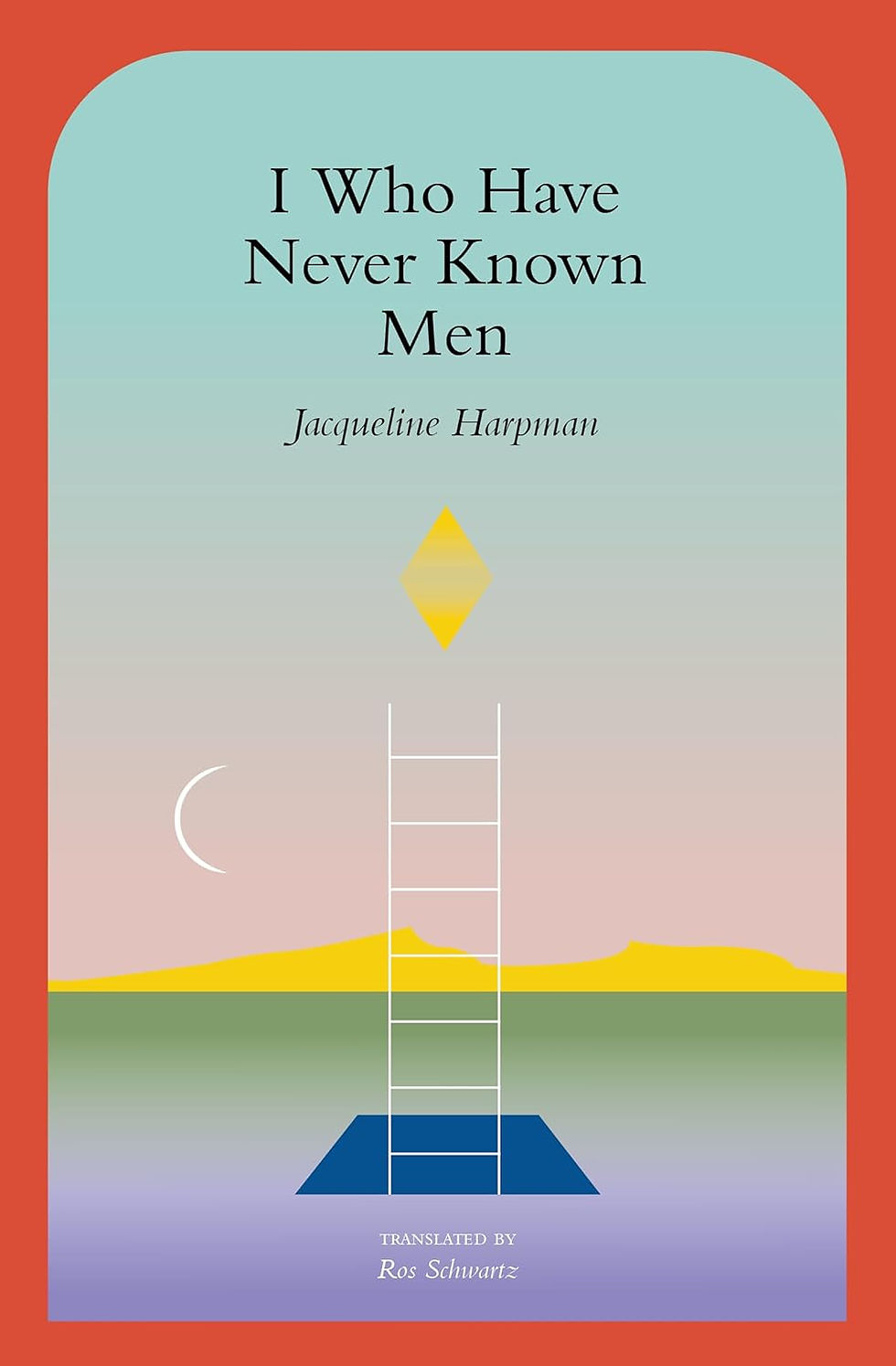
Harpman's slim novel poses a mysterious situation without promising concrete explanations. Our main protagonist knows little about her situation or location, yet persists in her quest for answers and builds a rich inner life filled with wonder.
Forty women (one is a young girl, our main protagonist) live year after year as prisoners in an underground cage. Male guards come and go, feeding the women minimal rations and never speaking.
The women have no recollection of how they came to be in this place, and no information is forthcoming about why they are trapped there. They are not allowed to touch each other but may speak, and to bond and pass the time, they share stories of their past lives, bicker over infinitesimal variations in how they may prepare their food or sew their own clothing, and simply kill time until their almost certain death inside the cell.
Then a blasting alarm sounds, the nearest guard drops his keys and flees, and the women scramble for an escape they never anticipated. But what awaits them on the other side of the bunker doors?

The novel's tone doesn't assure a satisfying set of answers as to why the women were chosen for this imprisonment, insight into what its purpose might be, or details as to its location.
Yet I was intrigued by the post-apocalyptic, puzzling situation and by the main protagonist's persistence and rich inner life, which exists in stark contrast to the physical barrenness that seems to surround her.
For my full review, please see I Who Have Never Known Men.
For more postapocalyptic and dystopian stories I've Bossily reviewed, please check out the titles here.
03 Clear by Carys Davies

Davies's slim, luminous, heartbreaking novel sets a story of isolation and human connection against the brutal removal of impoverished citizens from the land in mid-19th century Scotland.
Davies sets her stark, beautiful story Clear against the backdrop of the Scottish Clearances of the 19th century, in which impoverished citizens were driven off their land.
John Ferguson, a minister in need of funds for his new church accepts the job (against the advice of his wife) of evicting Ivar, the sole inhabitant of a remote island off the northern coast of Scotland in 1843. A series of events leads from disaster to recovery, to connection and secrets, to a surprising set of revelations.
The men develop a tender, heartwarming friendship separate from class, background, intellect, and societal expectations. John, at a distance from worries about his congregation and the future of Presbyterianism, as well as from his kind wife, sinks into Ivar's daily rhythm of working on the land, caring for animals, and finding wonder in nature.
Time passes as though in a vacuum, and the men's need for human connection overshadows all else. By the time John's wife appears--fresh from a rough sea journey, inspired to travel by a sense that John was in danger--the resolution feels heartbreaking, heartwarming, and utterly surprising in its generosity and departure from societal norms.
For my full review of this book please see Clear.
04 O Caledonia by Elspeth Barker

O Caledonia is a modern classic, literary fiction that encompasses darkly funny passages and tragic consequences set against a gloomy Scottish landscape that serves as a key character, it's so essential to the tone of the novel.
Barker's novel features Janet, a misunderstood, mocked, badly treated young woman coming of age in a family of obtuse, rigid, unkind members living in a gothic, ramshackle castle in Scotland.
Janet's only ally is her eccentric old Aunt Lila, who is herself powerless and in danger of being thrust from the family.
Boarding school leads to further ostracization and irritating demands upon Janet's time, when she'd prefer to lose herself in literature and avoid social interaction altogether.
This is darkly funny, with a surprisingly startling and tragic setup for O Caledonia's immersive, atmospheric story. I found the bookends that set the stage for (and close the loop on) a character's demise distracting, but I was captivated by the story inside.
Each attempt Janet makes to be her true self, delve into her interests, or behave naturally ends in a tragic reprimand or a disastrous set of consequences. She is punished for wanting, for knowing, and for achieving. Her family could be said to be paralyzed by societal norms if their imaginations weren't so lacking; no other routes appear to occur to them, so they plod cluelessly, and often cruelly, forward.
The bleak, unforgiving setting is as present as another character, with its dead orchard stretching into the distance; whipping, unrelenting wind; and dark, cold days.
For my full review, please see O Caledonia.
05 The Boy from the Sea by Garrett Carr

Carr's newest novel is a captivating series of character studies within a tightly knit Irish seaside community in the late 1900s. While characters struggle to make ends meet, support each other, and avoid giving in to the least generous parts of themselves, tragedies and wonders shape their community in this lovely, heartbreaking and heart-wrenching tale.
In a seaside Irish town in the 1970s, a baby is washed up on the shore. As the community wonders at his mysterious, whimsical appearance, they embrace Brendan, as he is ultimately named, as one of their own, yet hold him separate--and, for a time, credit him with the power of bestowing blessings upon them.
But the world of the story is grounded in day-to-day stressors and challenges. The country is reeling from economic troubles; Brendan's older adoptive brother deeply resents his presence; and conflicts and complicated dynamics underscore friendships, family relationships, and the community as a whole.
The story is a fascinating study of relationships, with heartwarming moments and heartbreaking developments alike. Brendan is not the main protagonist, despite the novel's title, yet he is central to the story in that his presence pushes others to determine what they're about. He remains steady in the face of external upheaval (and Declan's exceptionally poor treatment of him), until even Brendan begins to waver and to seem for a time unsure of who he is and what he is made of and made for.
When Carr offers various measures of character growth and resolutions toward the end of the book, they are reassuring and lovely, sometimes heart-wrenching, and fittingly complicated.
I listened to The Boy from the Sea as an audiobook.
Click here for my full review of The Boy from the Sea.
06 Time of the Child by Niall Williams

Time of the Child feels like poetry in prose form, and Williams richly shapes a small-town Irish community's everyday and extraordinary events in this poignant, gorgeous literary fiction novel.
In 1962 in the small Irish town of Faha, it's Christmastime, and Dr. Jack Troy and his oldest daughter Ronnie are coping with complicated family dynamics in their drafty, rural Irish home when an unexpected discovery turns everything upside down.
During the annual, chaotic community fair preceding this holidays, which this year is a rainy business full of haggling, disappointments, and triumphs, an infant is left by the church gates. Young Jude and Faha's grown twins, Tim and Tom, bring the baby girl to Dr. Troy and Ronnie, believing her dead but not sure what else to do. And she does seem to have passed on to another realm, until Dr. Troy is able to revive her. In an impulsive pact, the four men agree not to share the news of the baby with anyone.

What really shines in Time of the Child is the power of the small-town Faha community--gossipy and desperate for dirt as its citizens may largely be. The miracle of unity brought about by a baby's presence is poignant without feeling too easy. This story is beautiful and powerful.
Williams's writing feels like a poem in prose structure; no word is wasted, and I read this novel slowly in order to savor the world the author so gorgeously created.
For my full review of this book please see Time of the Child. You might also like to read the Bossy review of the Niall Williams novel This Is Happiness.


Comments