
Review of The Lost Book of Elizabeth Barton by Jennifer N. Brown

Brown's dual-timeline debut novel concerns 16th-century prophecies and a modern-day murder mystery, linked through time by a historian, a hidden book, an illiterate young girl, the powerful men who aimed to manipulate her, and two brave women who tried to save her life.
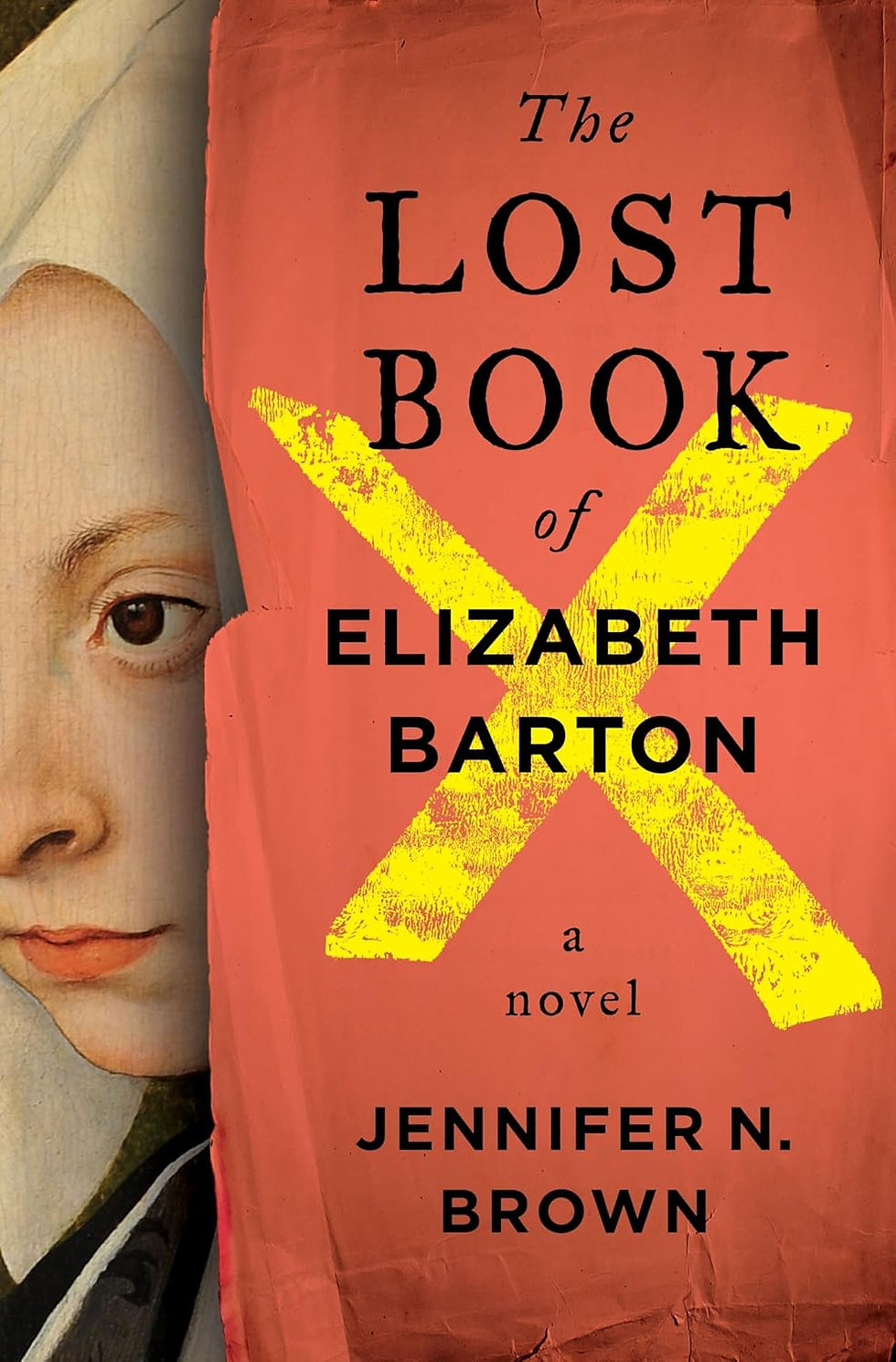
Historian Alison Sage recently made the discovery of a lifetime--she unearthed the fabled writings detailing the prophecies of a 16th-century nun, Elizabeth Barton, a slim book which had been thought to be lost forever.
The discovery of the book leads to Alison's first ever invitation to the exclusive Codex Consortium, where select historians gather to discuss discoveries and ideas. When she arrives, she realizes that her ex-lover is also in attendance, her friend and colleague she'd been expecting is not, and that the group has a closed-club feeling, and Alison is on the outside looking in.
But the consortium takes place on an estate with links to Elizabeth Barton herself, and Alison dives into trying to add to her vast knowledge of the woman she's spent so much time trying to understand.
But when a murder takes place on the grounds, everyone is a suspect. Clues to the murder--and, possibly, to vast riches from Barton's era--may lie in the story of Elizabeth Barton herself.
Brown toggles back and forth in time, so that we see Alison's experiences in present day as well as Barton's rise to fame centuries earlier.
An illiterate serving girl, Elizabeth initially has a true vision: she accurately predicts the death of a child in the household where she works. When powerful, religious and political figures get hold of Barton, they encourage her to speak about and "prophecy" in ways that benefit their causes, which the eager to please girl willingly does. She has one more true, vivid vision--that of Henry VIII heading to purgatory--then fills out her repertoire of "prophecies" as she is guided to do by greedy, power-hungry men in the church and the court. Two female characters in a priory and in a wealthy nearby estate (where the present-day historians are now gathered) attempt to protect Elizabeth and stop her dangerous rants, but her taste of power overwhelms her fear of retribution.
After Barton's prediction of the demise of Henry VIII and Anne Boleyn she is promptly hanged and then beheaded, with her disembodied head placed upon a spike as a warning to others who might speak against the king.
In the current-day timeline, some of Alison's fellow consortium attendees are hiding something. She might gain additional context by sending and replying promptly to key emails, but Alison experiences the classic miscommunication trope (in the vein of "I need to pursue this important communication but I keep getting sidetracked, oh well"), which is a relatively minor point here but which frustrates me as a delay tactic. Allusions to "treasure" make some in the present-day storyline imagine vast wealth hidden on the premises, and Alison realizes that some would do anything to find the fabled items.
We don't really get to know Elizabeth aside from her desire to make powerful men happy. We spend far more page time with Alison, her professional passion, and her interpersonal struggles.
Brown lays out clues (I wouldn't have minded more twists or elements to wonder about) for Alison (and the reader) to follow to a fairly neat and tidy conclusion, albeit with significant casualties.
I listened to The Lost Book of Elizabeth Barton as an audiobook courtesy of Libro.fm and St. Martin's Books.

More Historical Fiction Favorites
This is Jennifer N. Brown's first novel. She is a historian and a nonfiction author with several other works to her credit.
For more historical fiction Bossy favorites, please check out the Greedy Reading Lists and titles here.


Comments