
Review of The Calamity Club by Kathryn Stockett

The Help author's 656-page Depression-set historical fiction tackles issues of poverty, body autonomy, women's rights, race, and more within two timelines featuring spirited, determined, underestimated females who prove how strong they are.
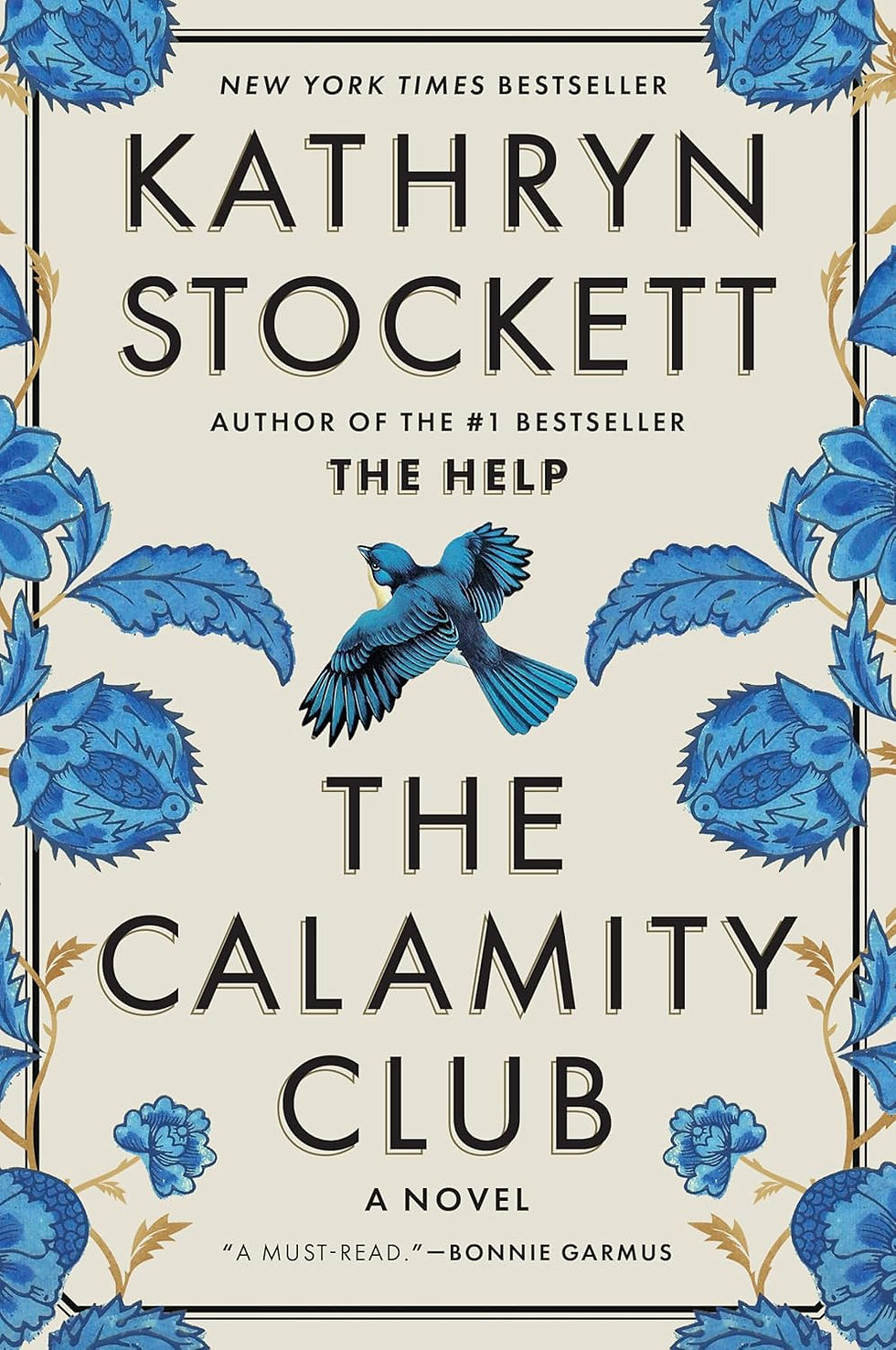
In Kathryn Stockett's newest, hefty (656-page) historical fiction novel, we dive into dual, linked storylines. It's 1933, the peak of the Great Depression, and in Mississippi, everyone is struggling.
We meet two main protagonists: independent young adult Birdie, who travels from her rural hometown to Oxford to beg her socialite, newly married sister for financial assistance for the family; and young Meg, who suffers cruelty in an orphanage after the disappearance and abandonment of her beloved mother. Both are spirited, smart, sassy, and full of personality.
...even though I was a grown woman, I still did what my mama told me to, and she still did what her mama told her to, and sometimes I thought if people didn't die, that cycle might never, ever stop.
Birdie's desperation for financial relief leads her down avenues she never would have anticipated, opening her mind to new possibilities and an understanding of others' extreme measures, while Meg's grim circumstances lead to a roller coaster of security, uncertainty, tragedy, and carefully protected, cautious hopes for the future.
Stockett includes plot points that are linked to chilling, actual federal laws regarding women's health during the time--which, as she says in her Author's Note, "feel eerily relevant today. The Chamberlain-Kahn Act...legalized and encouraged police to stop any woman on the street who looked promiscuous. Police were to detain the woman and test her for sexually transmitted diseases. For over half a century, tens of thousands of American women were seized and 'forcibly examined'...or even sterilized."
After the women in the novel develop an audacious plan to make money and thereby gain the power to shift their futures in a bleak financial world where men hold all the cards, the book slowly builds to a crescendo of activity and illegal, risky behavior. The pacing flagged for me during this slow-roll section, although I appreciated that Stockett didn't smooth the way too outrageously for the tricky situation.
The villain in the orphanage is easily detestable, feels purely vindictive (we eventually find out the reason for her petty, shocking evil), and somehow remains married to a kind, if weak, man with an upstanding reputation (but a checkered past).
The story is long enough to meander at times; we drift in and out of Birdie's and Meg's lives without hurry, spending some days in which little occurs but scene-setting and a building of the story's tone, all of which I enjoyed. But by the time key matters are resolved, after so much page time, the resolutions feel somewhat abrupt.
I appreciated Stockett's taking time for difficult truth-telling among characters, the chances for newly imagined second chances, and the stories of complicated redemption.
I received a prepublication version of this title courtesy of NetGalley and Spiegel & Grau.

More Books You Might Like
Kathryn Stockett also wrote The Help.
Please check out this link for other novels set during the Great Depression.


Comments